
More than half of web traffic is automated, and only some of it is welcome. The big three all sell an answer; they detect, decide and charge differently enough that the comparison matters.
Detection philosophy
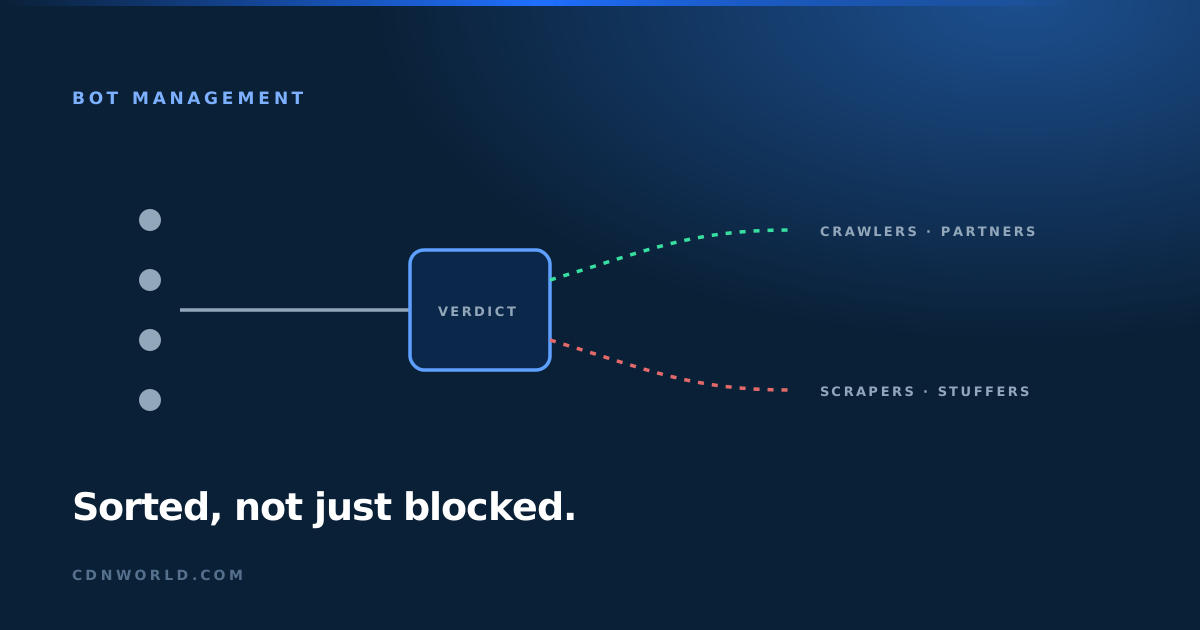
All three combine signals: client fingerprinting, behavioral analysis, reputation networks and machine learning across their traffic bases. Scale of visibility differs, as does transparency, how much you can see about why a verdict was reached, which matters enormously when a partner integration gets misclassified. The half-of-traffic figure reframes the product category: this is not an edge case filter but a decision system for the majority of your requests.
Response options
Blocking is the bluntest tool. Better options: serving alternate content, rate-limiting, tarpitting suspicious sessions, or silently flagging for downstream logic. Managed-challenge approaches have largely replaced customer-hostile CAPTCHAs, a mercy for conversion rates. Transparency differences surface at the worst moments: when a payment partner’s integration or a search crawler gets misclassified, the platform that explains its verdicts turns a crisis into a configuration change.
The arms-race framing deserves calibration: sophisticated operators do defeat detection, and vendors know it. The realistic goal is economic, not absolute: raise the per-request cost of automation against you until your property stops being worth the effort at scale. Managed challenges, behavioral scoring and progressive friction achieve exactly that, imposing costs invisible to humans and expensive to farms. Evaluate vendors on that economic framing, how much do they raise the attacker’s costs per unit of friction imposed on customers, rather than on detection-rate claims that no independent party can verify anyway.
The commercial angle
Bot management is priced as a premium layer everywhere, per request, per tier or bundled upward. The right spend depends on what bots cost you: scraped pricing, inventory hoarding, credential stuffing and ad fraud have real numbers, and protection should be sized against them, not against fear. Sizing against measured cost also disciplines the deployment: protections tuned to the abuse you actually suffer generate fewer false positives than protections tuned to a threat report’s imagination.
In practice
Quantify your bot cost before the vendor calls: pick your two worst abuse patterns, estimate their monthly cost in scraped value, hoarded inventory or fraud losses, and write the number down. That figure sizes the sensible spend, anchors the negotiation, and, six months after deployment, becomes the denominator that proves whether the product earned its line. Vendors quote differently to buyers holding a denominator.
We benchmark bot capabilities against your actual abuse profile, then price the options side by side.