
The best time to lower your CDN bill is not when you switch. It is the ninety days before your current contract renews, when your provider quietly assumes you will sign whatever lands in your inbox.
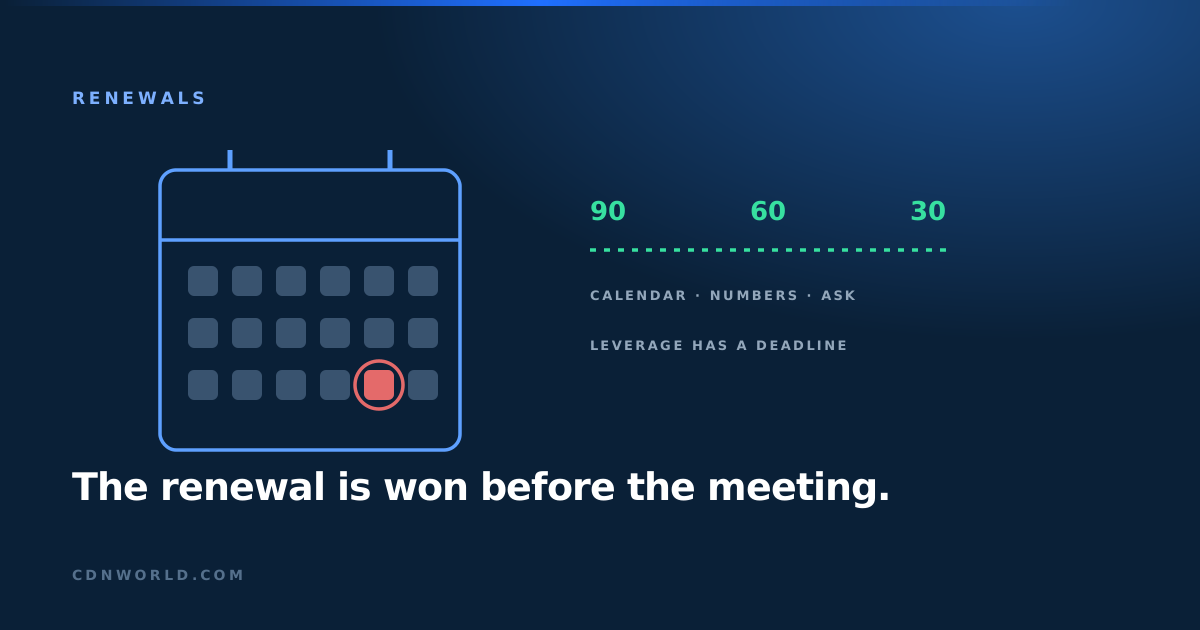
Leverage has a calendar
Renewal leverage peaks while you still have time to move and collapses the day after auto-renewal. Find the notice date in your contract, put a reminder ninety days ahead of it, and treat that date as the real deadline. Everything in a renewal negotiation flows from having enough runway to credibly walk. Providers plan renewal season on the assumption that fewer than one buyer in ten arrives with data. Being that buyer changes the meeting before anyone speaks.
Arrive with numbers, not adjectives
A provider can argue with your opinion of their pricing. They cannot argue with a benchmark. Current market rates at your volume, one comparable quote from a competing network, and your own effective rate from the last three invoices form the entire case. Effective rate means what you actually paid divided by what you actually shipped, which is often well above your headline rate once minimums and overages are counted. One warning about the competing quote: it must be genuine. Account teams can smell a courtesy quote requested the week before renewal, and the difference between a real alternative and a prop shows up in the final percentage.
What does a good outcome look like in practice? Not always a headline rate cut. The strongest renewals we have run combined a modest rate improvement with structural wins: overage repriced to tier rate, the commitment resized to reality, auto-renewal replaced with an affirmative option, and a mid-term benchmark clause added. Each clause is small; together they compound into a contract that keeps repricing itself in your favor. Providers concede structure precisely because it does not show up in their discount reporting, which makes it the quiet channel through which prepared buyers extract most of their value.
Ask for the structure, not just the rate
The rate is one lever of several. Shorter terms, lower commitments with the same rate, overage billed at tier rate, and removal of auto-renewal clauses all move real money. Providers concede structure more easily than headline price, and structure is usually worth more over the life of the contract. A useful frame for the conversation: you are not asking for a favor, you are repricing a commodity at current market rates. The tone that follows from that frame, unhurried and factual, does more work than any negotiating tactic.
In practice
Ninety days out: pull the notice date and calendar it. Sixty days out: gather three invoices, compute the effective rate, request one genuine competing quote at your volume. Thirty days out: open the conversation in writing with the numbers attached and a specific ask. Providers respond to specificity, and paper trails concentrate minds wonderfully.
We run this playbook for clients as part of the free assessment, and the report is yours to negotiate with even if you never buy through us.