
The guide library.
Step-by-step technical references, written from practice, stamped with a last-verified date — and each one ends with a worksheet you can take into the room.
Trusted by 100+ enterprises worldwide
Technical guides, verified and dated.
How-to references written from practice: benchmarks, contracts, migrations, security and multi-CDN operations. Each guide carries a last-verified date and ends with a worksheet you can take into the room. New guides publish in batches — one hundred live today, the full library is on its way.
 Getting started
How to run your first CDN benchmark in one afternoon.
Getting started
How to run your first CDN benchmark in one afternoon.
A step-by-step method for benchmarking CDN candidates against your real traffic.
 Contracts & pricing
How to read a CDN contract: the eight clauses that matter.
Contracts & pricing
How to read a CDN contract: the eight clauses that matter.
The eight contract clauses that decide what a CDN deal really costs.
 Migration & setup
CDN migration: the zero-downtime cutover checklist.
Migration & setup
CDN migration: the zero-downtime cutover checklist.
A staged CDN cutover plan.
 Performance
Cache-hit ratio: how to measure it properly (and what's good).
Performance
Cache-hit ratio: how to measure it properly (and what's good).
Request hit ratio versus byte hit ratio, where each is reported, what values are healthy per content type, and.
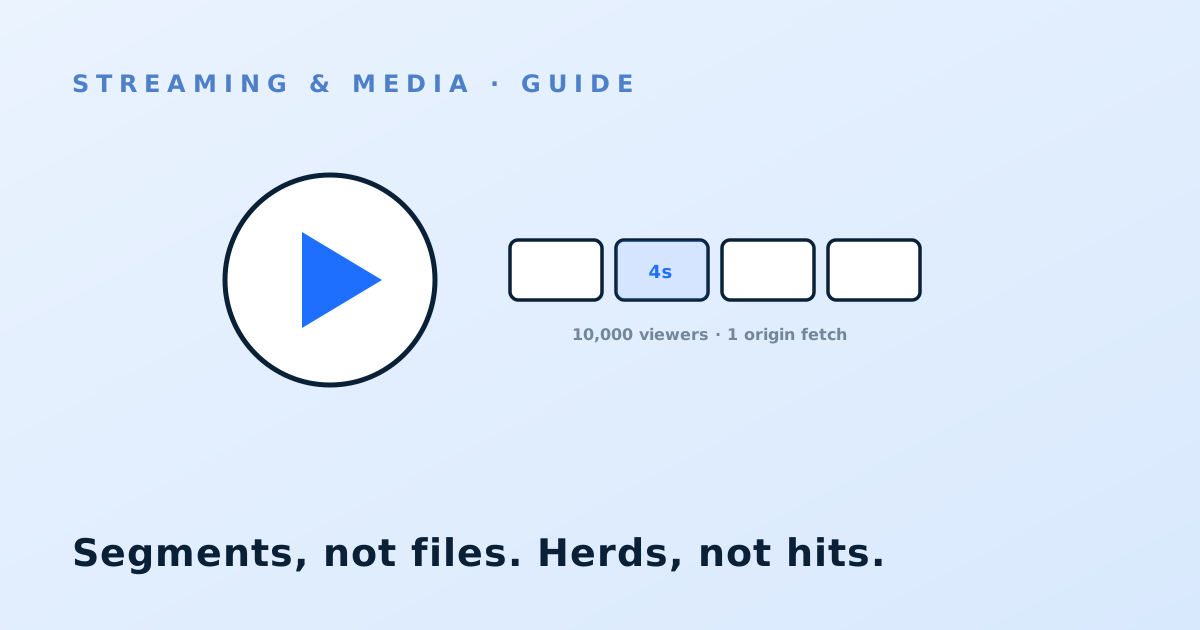 Streaming & media
Choosing a CDN for video streaming: what actually matters.
Streaming & media
Choosing a CDN for video streaming: what actually matters.
The criteria that decide video CDN selection.
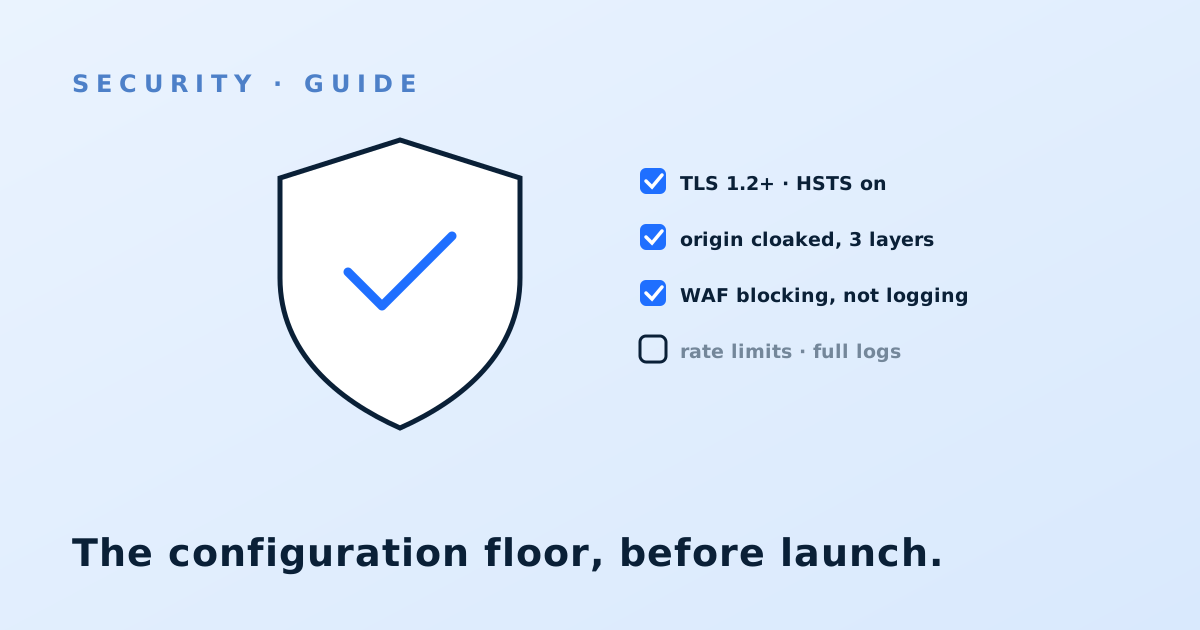 Security
The CDN security baseline: what to switch on before launch.
Security
The CDN security baseline: what to switch on before launch.
The edge security settings every deployment should enable.
 Multi-CDN
 failover: a working setup, step by step.
Multi-CDN
Multi-CDN failover: a working setup, step by step.
How to run two CDNs with automatic failover.
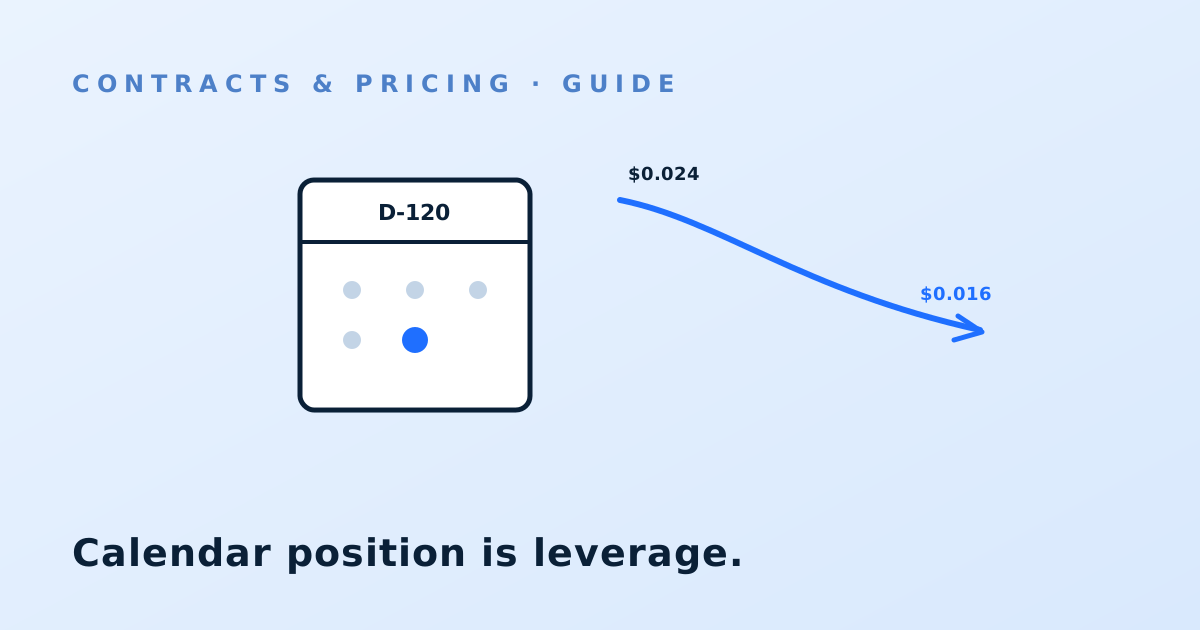 Contracts & pricing
How to negotiate a CDN renewal: timeline, levers, numbers.
Contracts & pricing
How to negotiate a CDN renewal: timeline, levers, numbers.
A 120-day renewal playbook.
 Performance
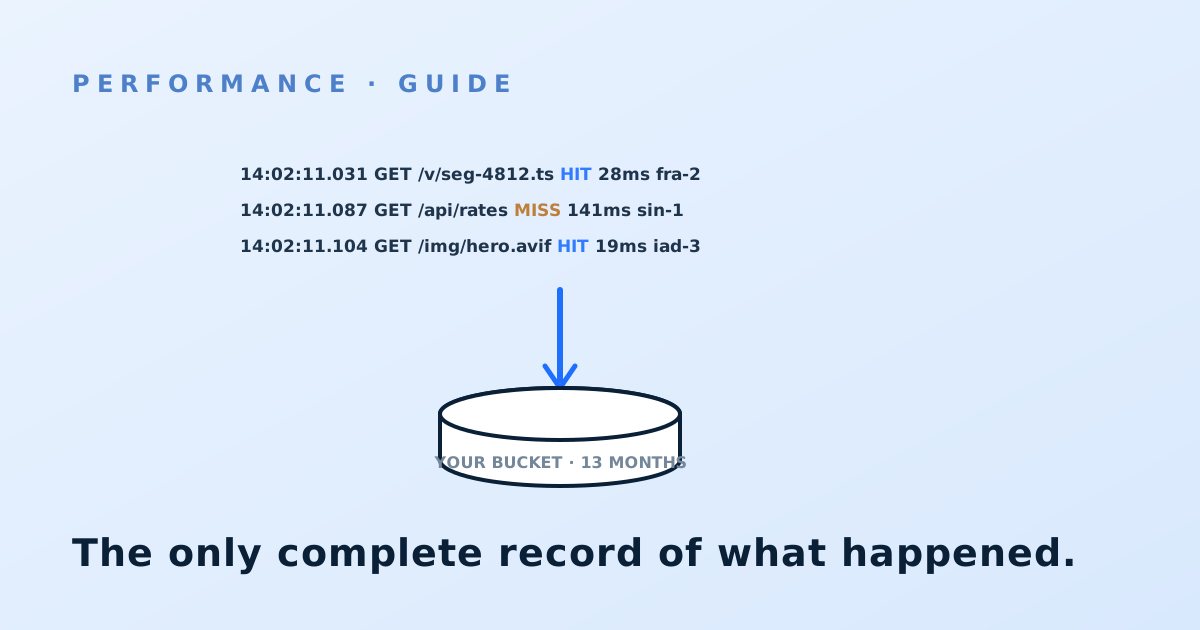
CDN logs: what to collect, where to keep it, what it costs.
Performance
CDN logs: what to collect, where to keep it, what it costs.
The edge log fields worth keeping, retention tiers that balance cost against investigations, delivery options .
 Choosing a provider
Delivering into mainland China: licenses, options, timelines.
Choosing a provider
Delivering into mainland China: licenses, options, timelines.
What ICP filing and licensing actually require, the three delivery architectures available to foreign companie.
 Choosing a provider
How to write CDN requirements: a one-page template that works.
Choosing a provider
How to write CDN requirements: a one-page template that works. Replace the feature wishlist with workloads, numbers and disqualifiers that actually separate vendors.
 Choosing a provider
How to shortlist CDNs: from thirty vendors to three in a week.
Choosing a provider
How to shortlist CDNs: from thirty vendors to three in a week. A five-day elimination method that turns the whole vendor field into three testable candidates.
 Choosing a provider
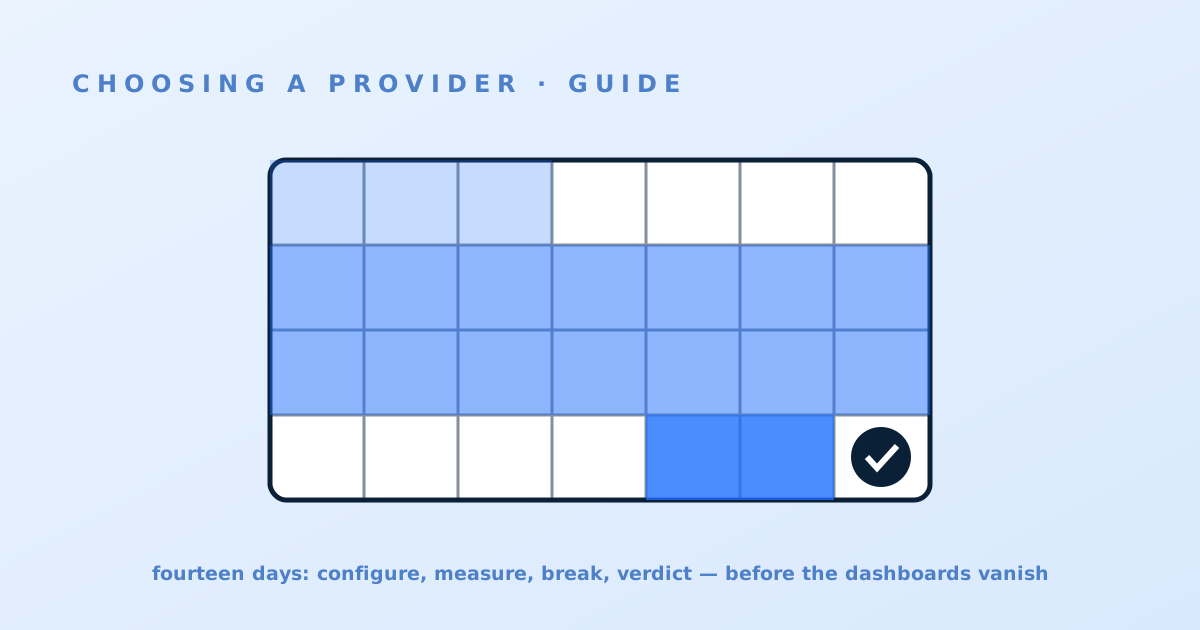
How to run a CDN free trial properly: a 14-day test plan.
Choosing a provider
How to run a CDN free trial properly: a 14-day test plan. Turn 14 trial days into an experiment: real traffic, deliberate failures, verdicts written before expiry.
 Contracts & pricing
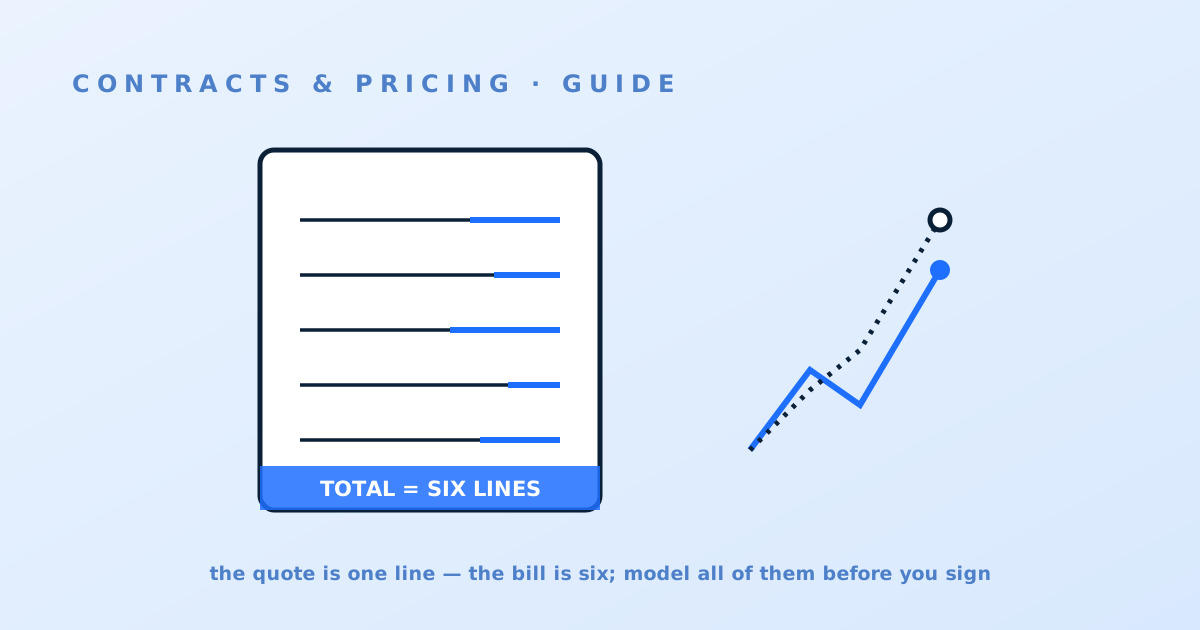
How to estimate CDN costs before you commit: the TCO worksheet.
Contracts & pricing
How to estimate CDN costs before you commit: the TCO worksheet. Six line items, your traffic profile, and the sensitivity checks that catch bill surprises early.
 Choosing a provider
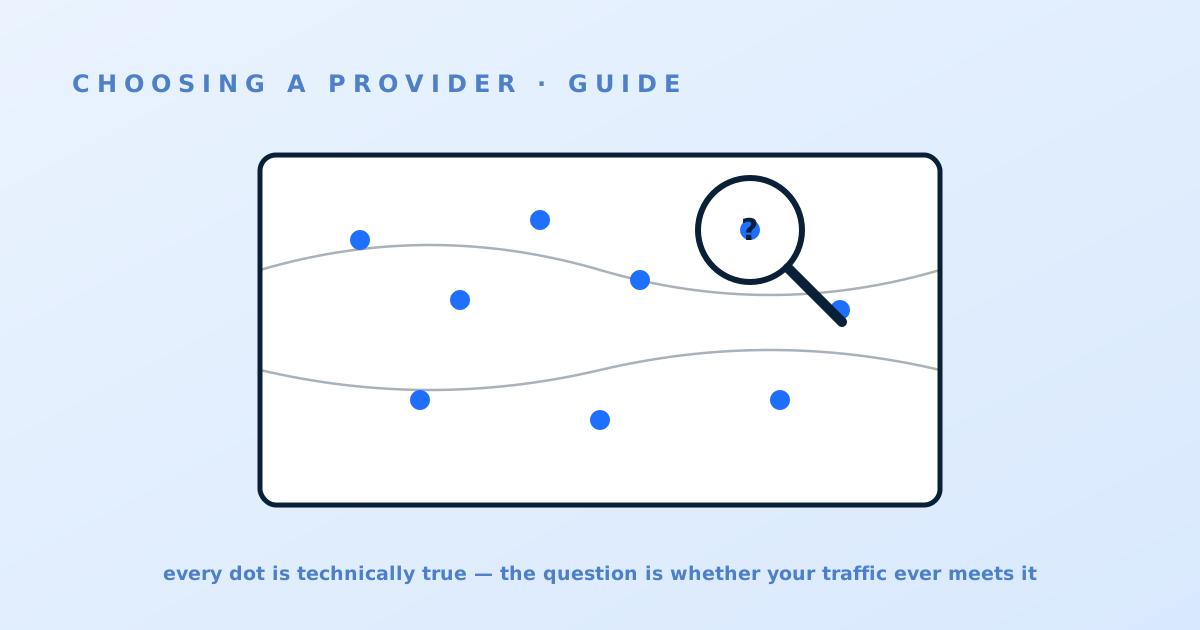
How to read CDN coverage maps critically: POPs vs reality.
Choosing a provider
How to read CDN coverage maps critically: POPs vs reality. Dots vs served traffic, peering vs presence — the questions that turn a map into evidence.
 Getting started
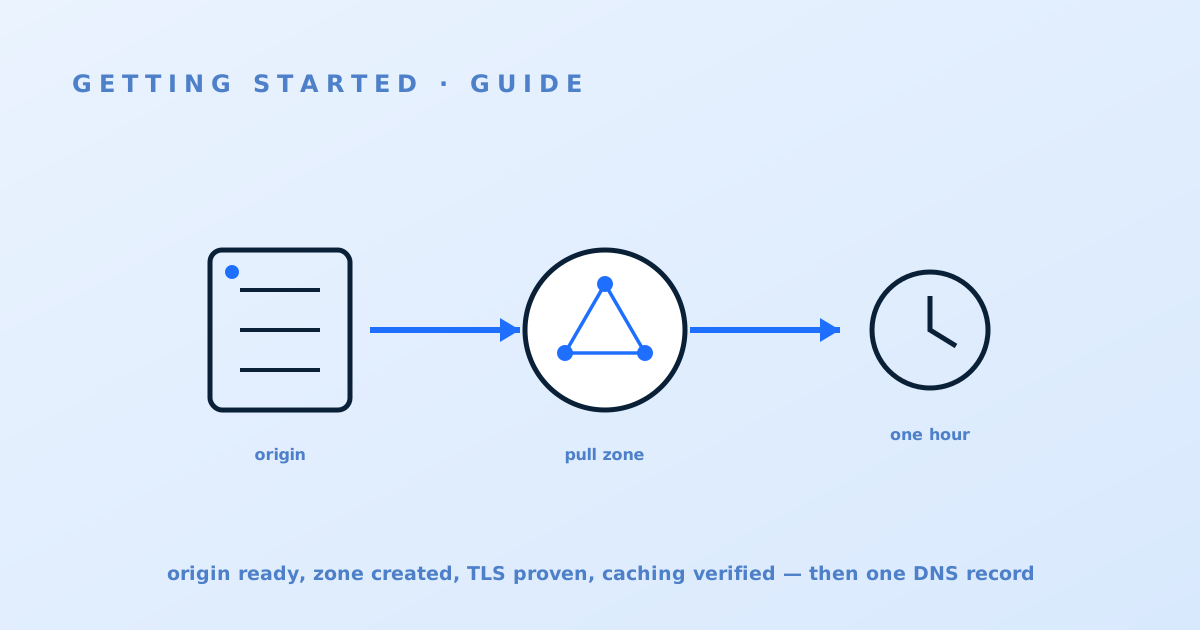
How to set up your first pull zone: origin to edge in an hour.
Getting started
How to set up your first pull zone: origin to edge in an hour. The provider-agnostic first hour: origin, zone, TLS, verify it's actually caching, cut over.
 Migration & setup
How to configure DNS for a CDN: CNAME, apex and TTL choices.
Migration & setup
How to configure DNS for a CDN: CNAME, apex and TTL choices. Subdomain CNAMEs, the apex problem, TTL strategy — the records that keep your estate flexible.
 Getting started
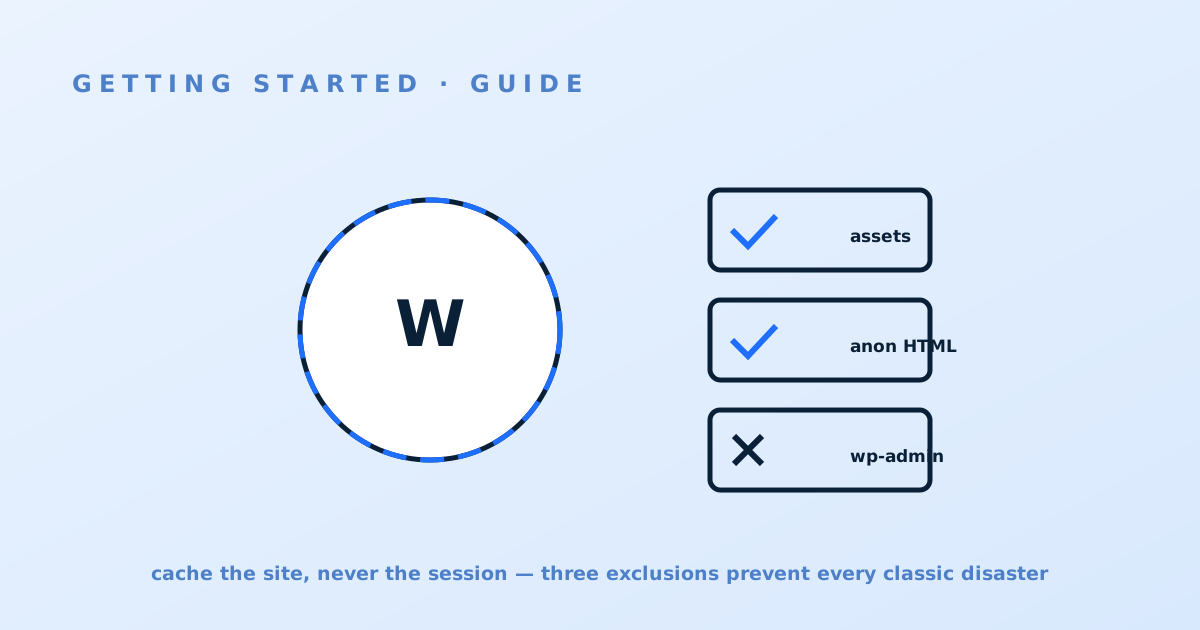
How to put a CDN in front of WordPress without breaking it.
Getting started
How to put a CDN in front of WordPress without breaking it. The cookie and admin exclusions, publish-time purging, and the checks before you trust it.
 Migration & setup
How to CDN an e-commerce store: dynamic pages, carts and cache rules.
Migration & setup
How to CDN an e-commerce store: dynamic pages, carts and cache rules. The four-tier content model, cart-safe rules, and sale-day preparation for stores.
 Migration & setup
How to serve a single-page app through a CDN correctly.
Migration & setup
How to serve a single-page app through a CDN correctly. Immutable bundles, fresh index.html, route fallbacks and deploys that never strand users.
 Migration & setup
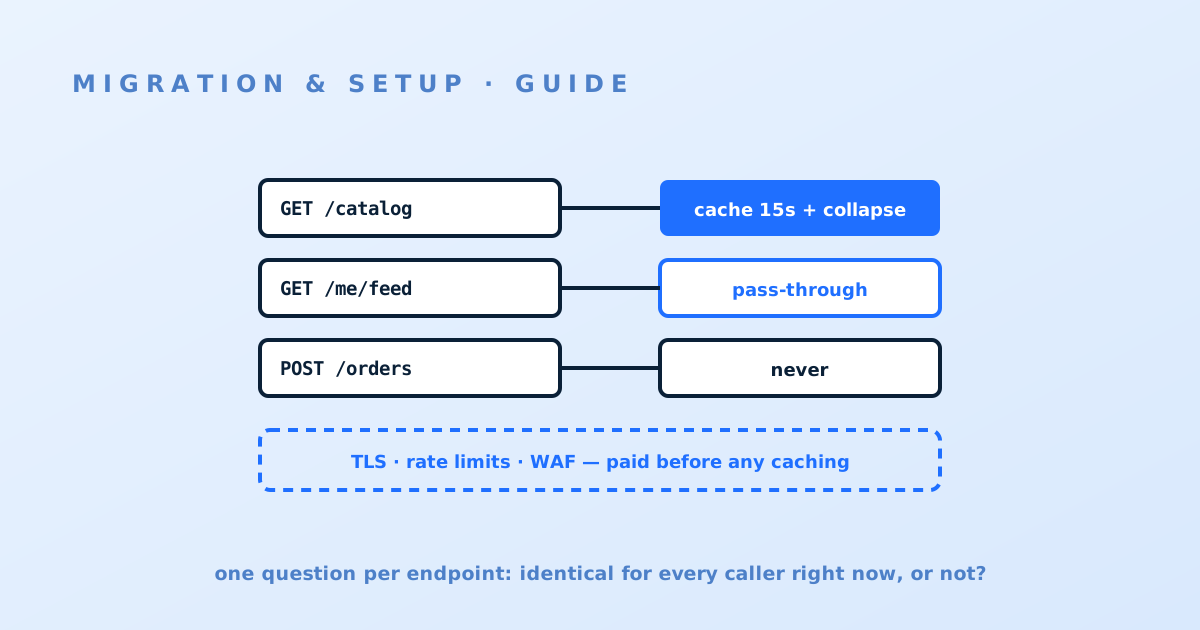
How to CDN your API: what to cache, what never to.
Migration & setup
How to CDN your API: what to cache, what never to. What the edge buys at zero caching, which endpoints can micro-cache, and the rules that keep it safe.
 Choosing a provider
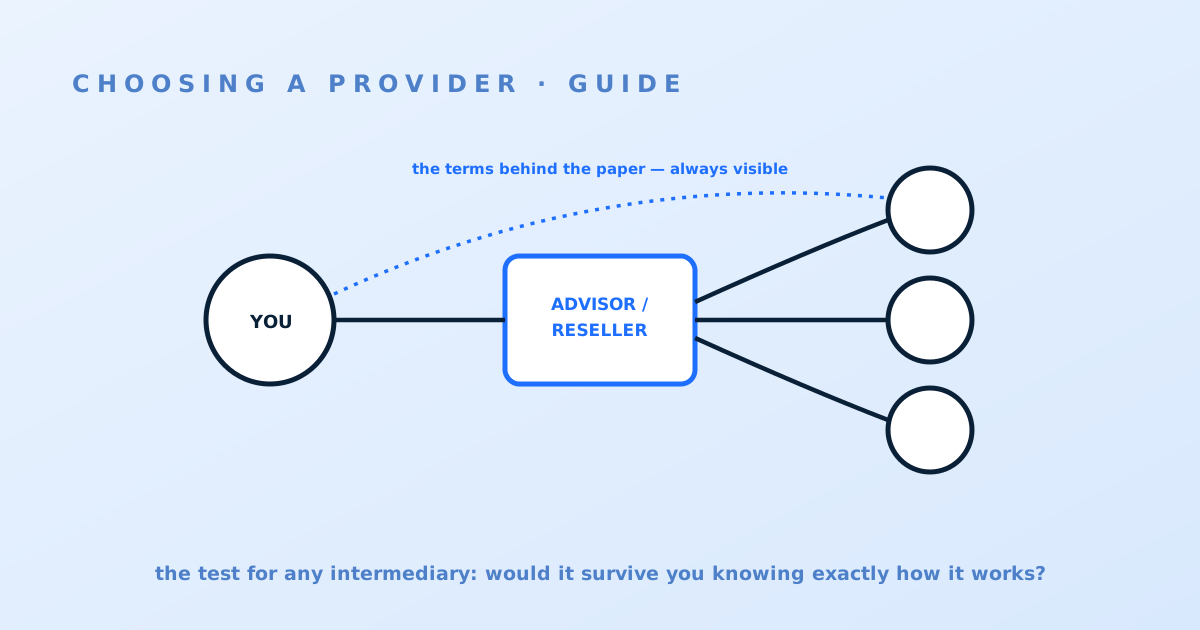
How to work with a CDN advisor or reseller: what to expect and demand.
Choosing a provider
How to work with a CDN advisor or reseller: what to expect and demand. What the indirect channel actually does, where its economics come from, and what to demand.
 Choosing a provider
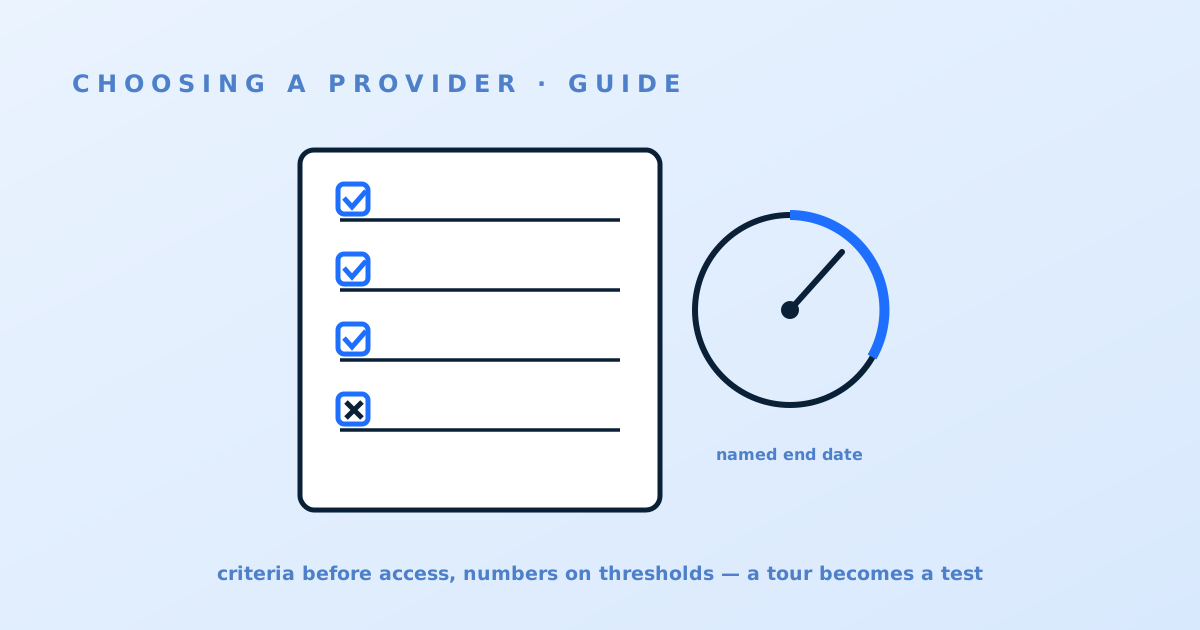
How to plan a CDN proof-of-concept: success criteria that bite.
Choosing a provider
How to plan a CDN proof-of-concept: success criteria that bite. Criteria before access, numbers on thresholds, failure days in scope — PoCs that produce decisions.
 Performance
How to design cache keys: the checklist that controls your bill.
Performance
How to design cache keys: the checklist that controls your bill. What belongs in the key, what to normalize out, and the audit that finds fragmentation.
 Performance
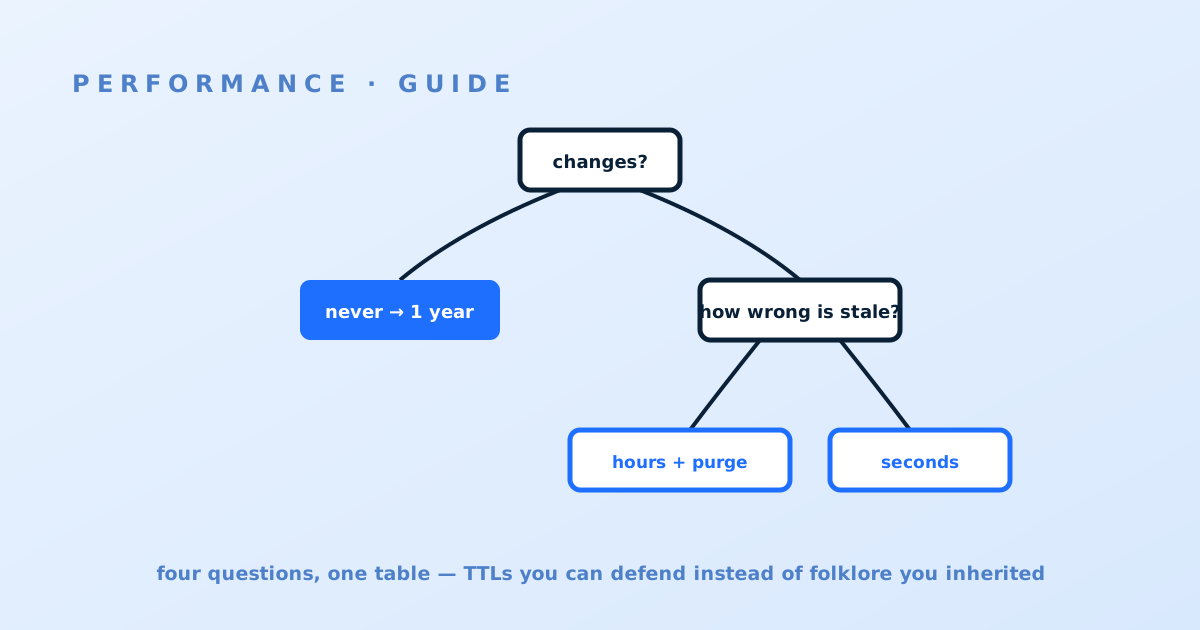
How to set TTLs: a decision tree for every asset class.
Performance
How to set TTLs: a decision tree for every asset class. Four questions that land every asset class on a defensible number, not folklore.
 Performance
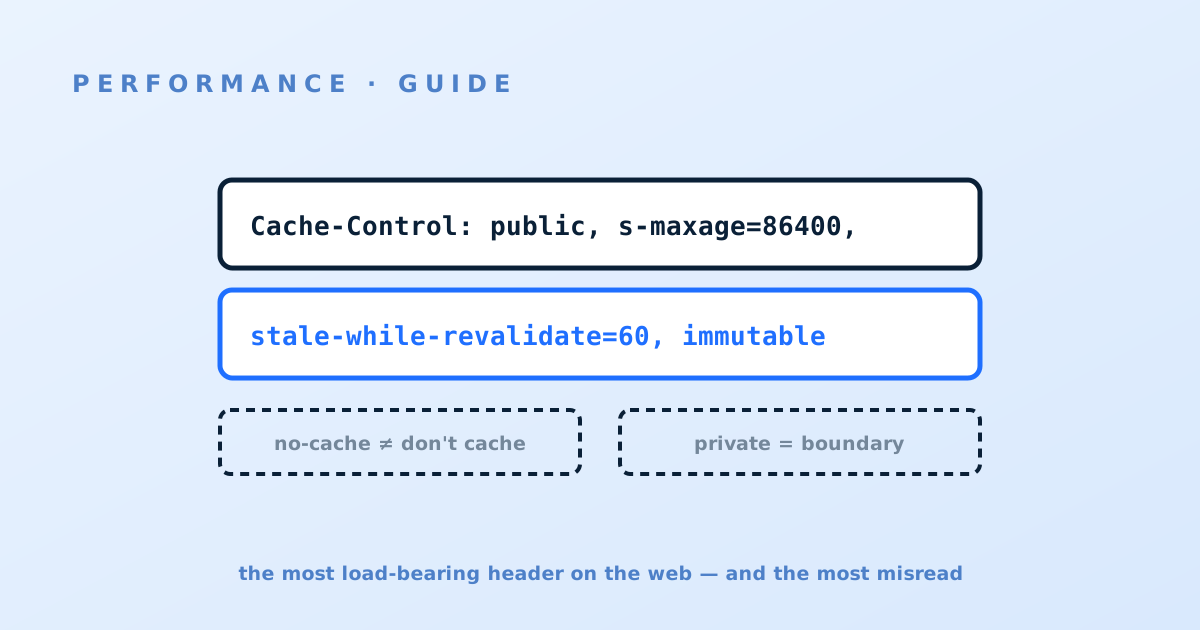
How to use Cache-Control properly: the directives that actually matter.
Performance
How to use Cache-Control properly: the directives that actually matter. What each directive really means — including the ones everyone misreads — and the combinations to memorize.
 Performance
How to implement stale-while-revalidate and serve-stale safely.
Performance
How to implement stale-while-revalidate and serve-stale safely. SWR and stale-if-error per platform, the windows to choose, and rails for content that must not lie.
 Performance
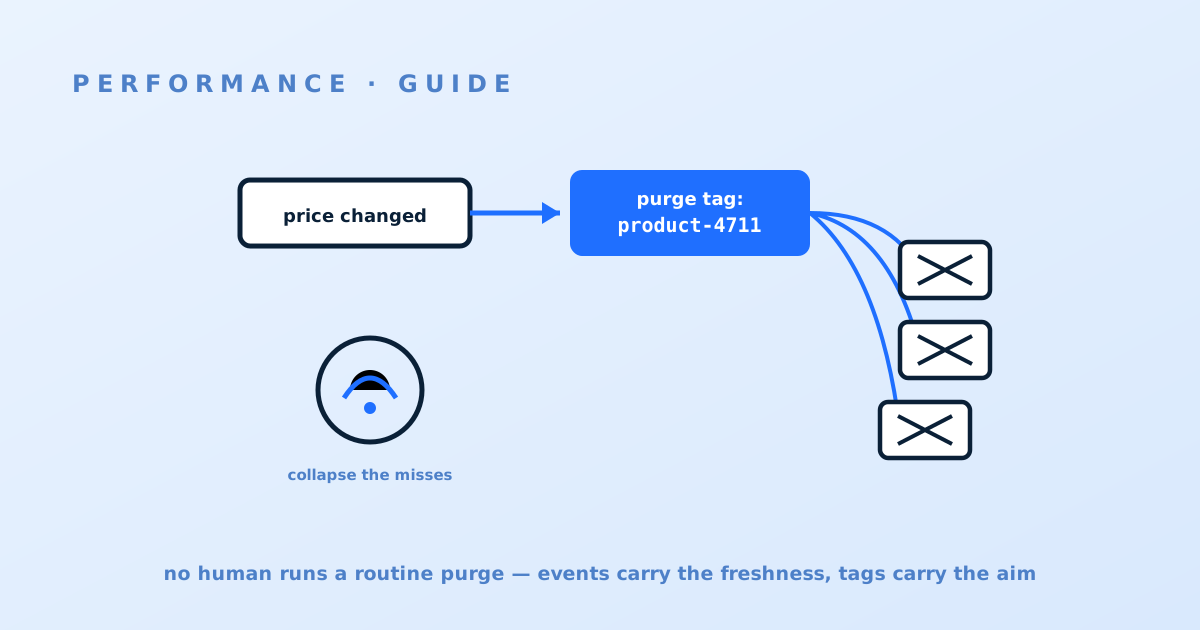
How to purge without pain: tags, wildcards and workflows.
Performance
How to purge without pain: tags, wildcards and workflows. The three purge types, surrogate-key design, event wiring, and stampede protection.
 Performance
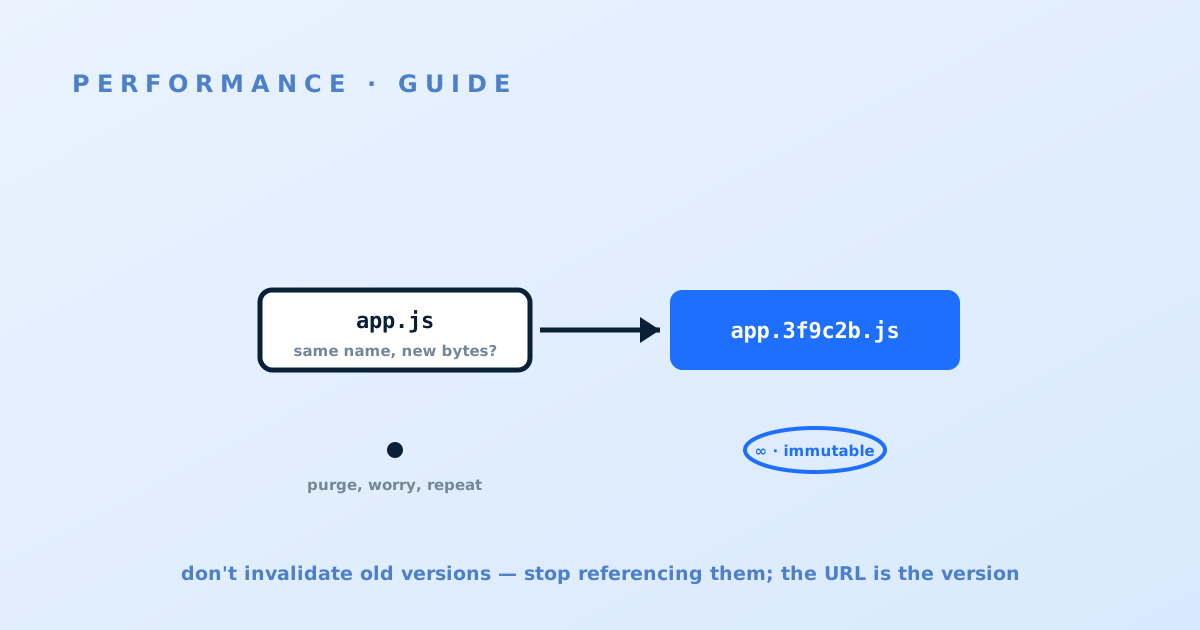
How to version static assets: cache-busting that never breaks.
Performance
How to version static assets: cache-busting that never breaks. Content hashes vs query versions, the reference chain rule, deploy order and retention windows.
 Performance
How to raise cache-hit ratio: ten levers in order of impact.
Performance
How to raise cache-hit ratio: ten levers in order of impact. Ten ranked levers from key normalization to HTML caching, each with its expected gain.
 Performance
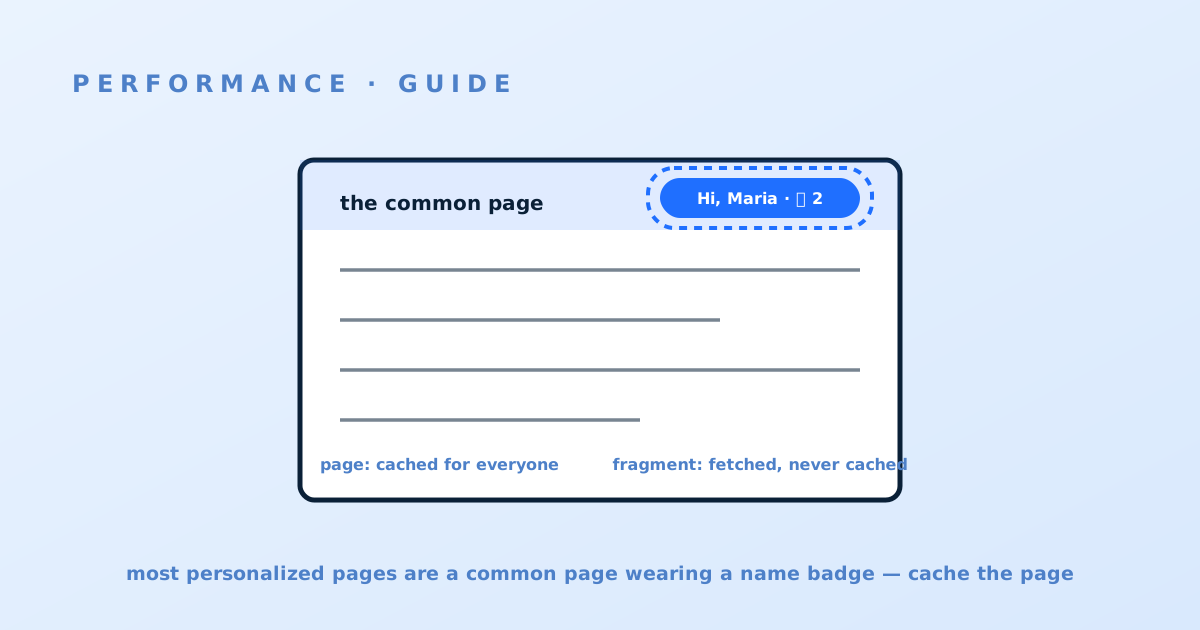
How to cache HTML safely: rules for pages that change.
Performance
How to cache HTML safely: rules for pages that change. The anonymous split, bypass rules, personalized-fragment patterns and pre-launch leak tests.
 Performance
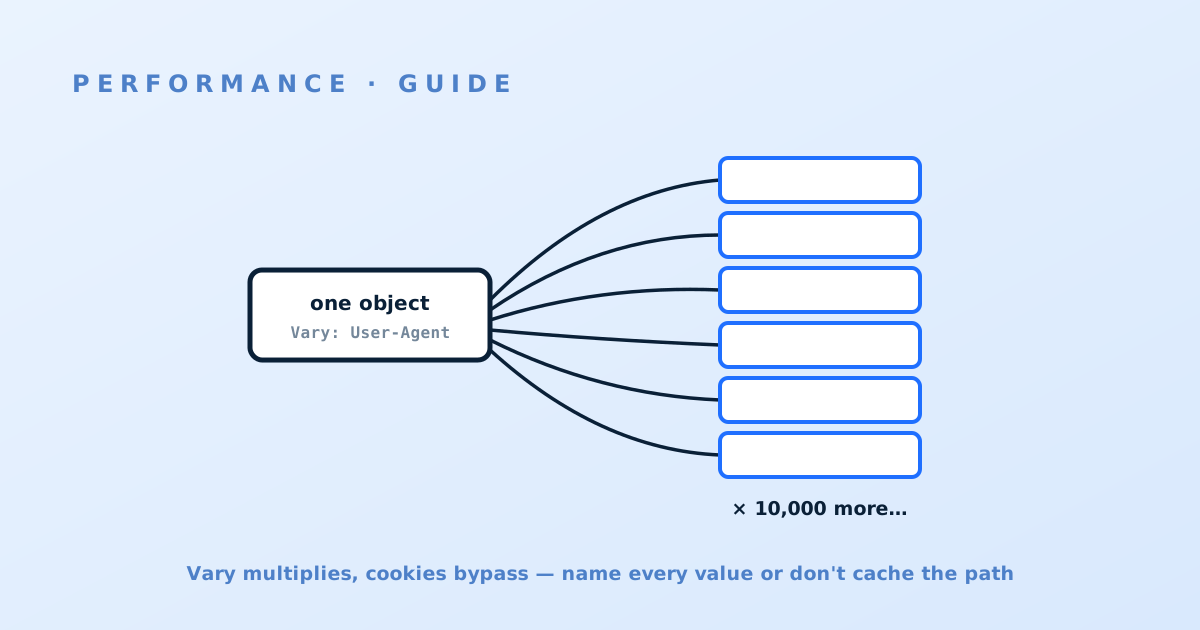
How to handle cookies and Vary without shredding your cache.
Performance
How to handle cookies and Vary without shredding your cache. Cookie rules that separate session from noise, Vary's legitimate uses, and the audit for both.
 Performance
How to configure origin shield: when, where and how.
Performance
How to configure origin shield: when, where and how. The three signals it pays, shield placement, per-platform cost shapes, and verifying the collapse.
 Performance
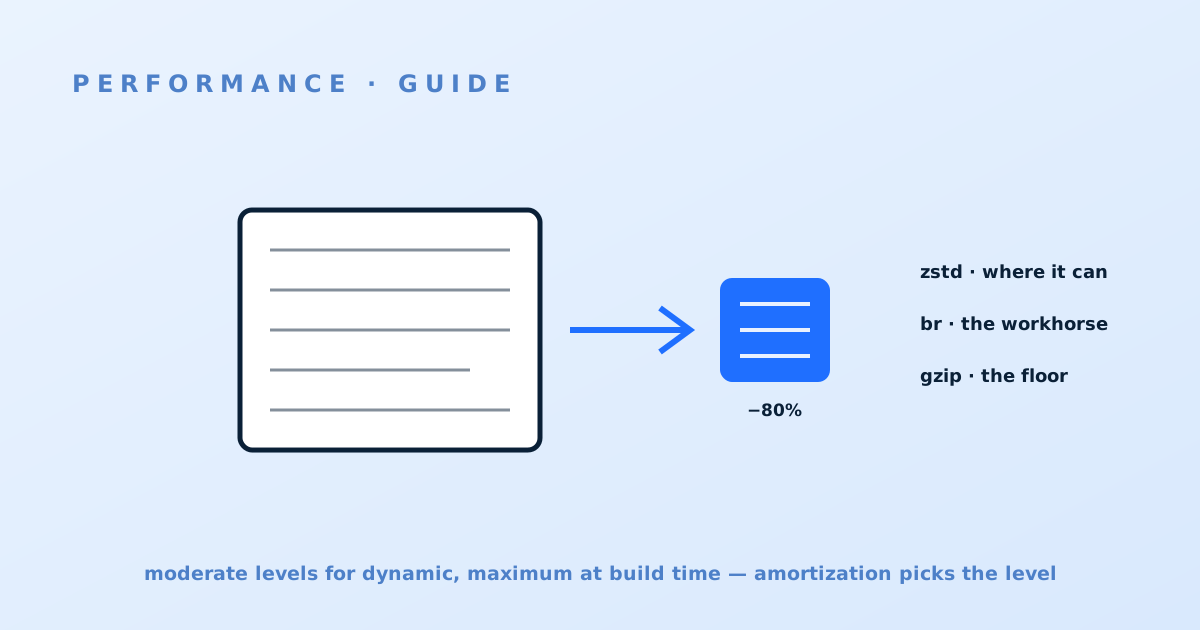
How to compress at the edge: Brotli, gzip and Zstandard settings.
Performance
How to compress at the edge: Brotli, gzip and Zstandard settings. What to compress, the two-track level strategy, variant caching, and where Zstandard stands.
 Performance
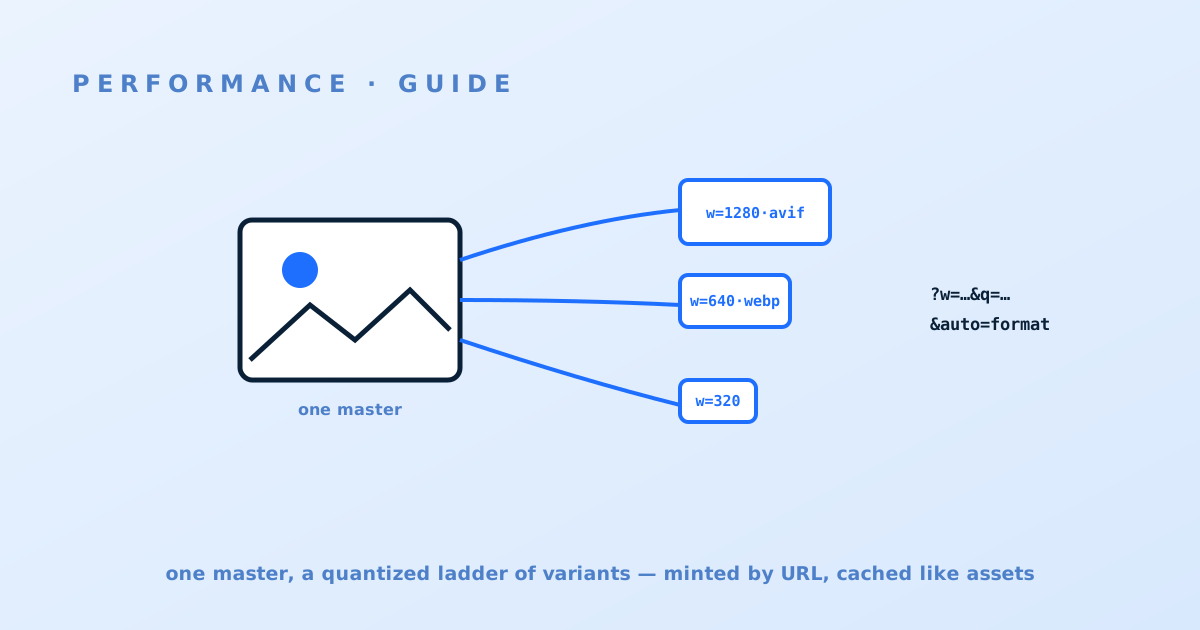
How to serve images through a CDN: formats, variants, optimization.
Performance
How to serve images through a CDN: formats, variants, optimization. The format ladder, URL-based variants, responsive sizing, and metering that controls cost.
 Performance
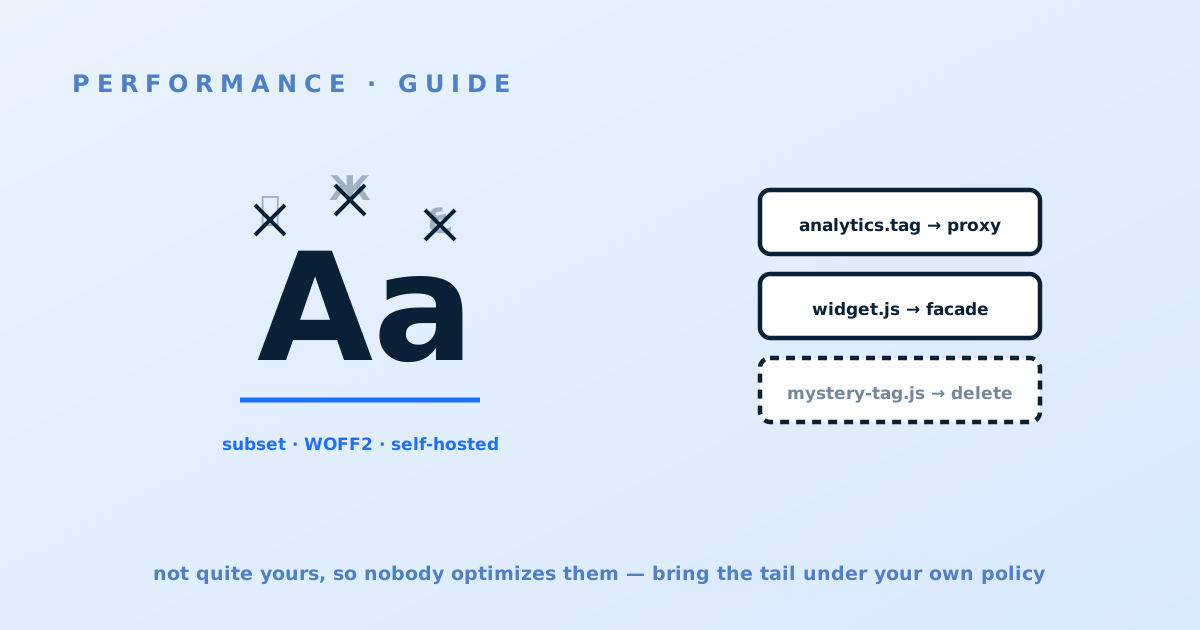
How to cache fonts and third-party assets: the overlooked wins.
Performance
How to cache fonts and third-party assets: the overlooked wins. Font subsetting and self-hosting, the end of the shared-cache myth, and taming the third-party tail.
 Performance
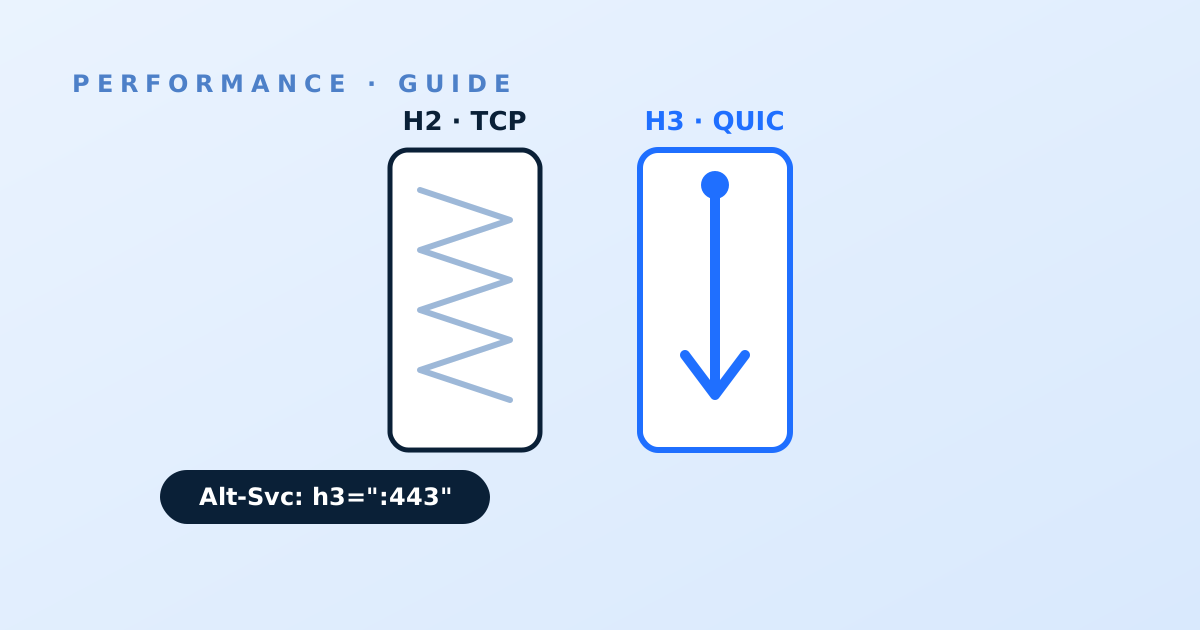
How to enable HTTP/3 and verify it's actually serving.
Performance
How to enable HTTP/3 and verify it's actually serving. Alt-Svc, the toggle, and the three checks that prove QUIC is carrying real traffic.
 Performance
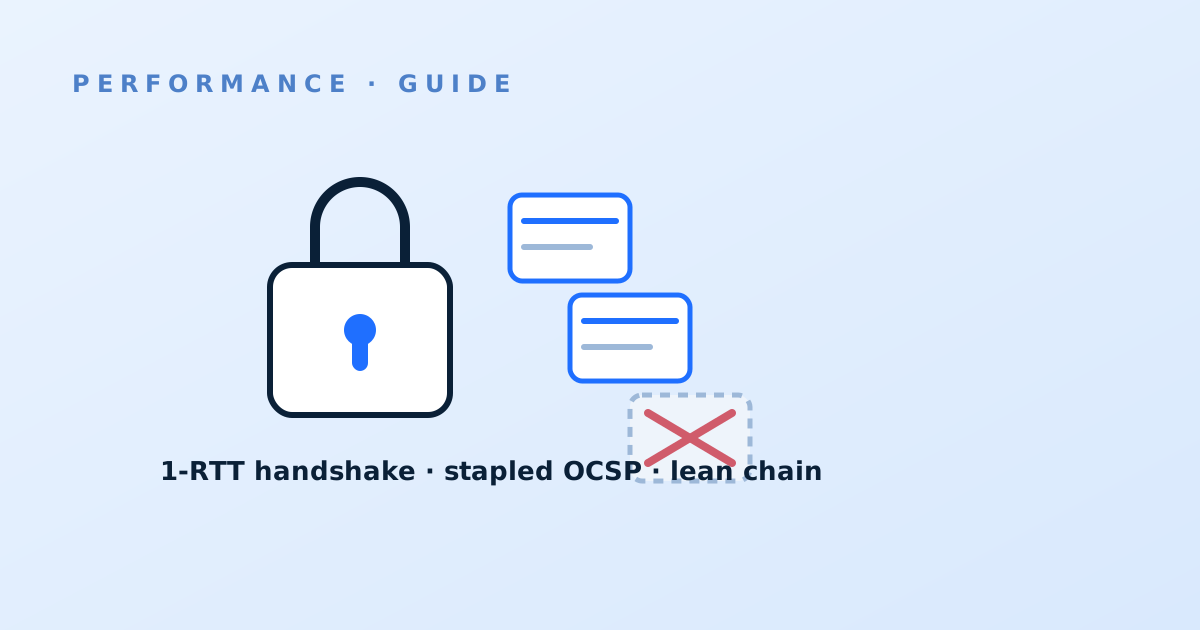
How to tune TLS at the edge: resumption, OCSP and chains.
Performance
How to tune TLS at the edge: resumption, OCSP and chains. The handshake is a tax on every new connection. Resumption, stapling and a lean chain cut it.
 Performance
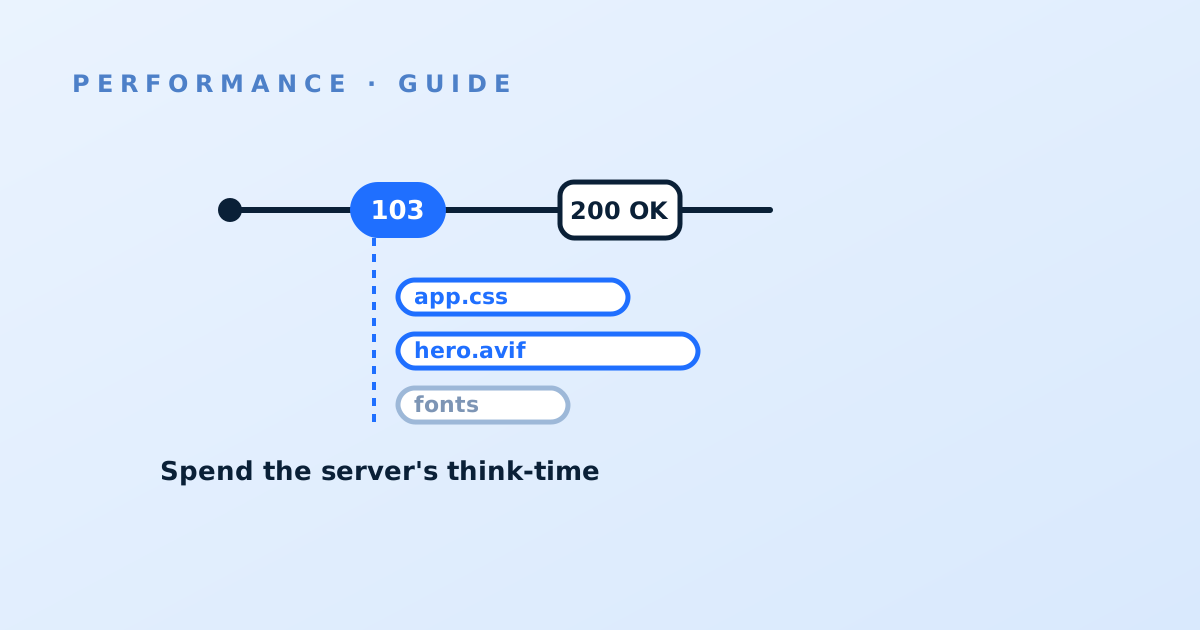
How to use Early Hints and preload headers for real gains.
Performance
How to use Early Hints and preload headers for real gains. Use the server think-time. What to hint, what to skip, and how to measure the LCP shift.
 Performance
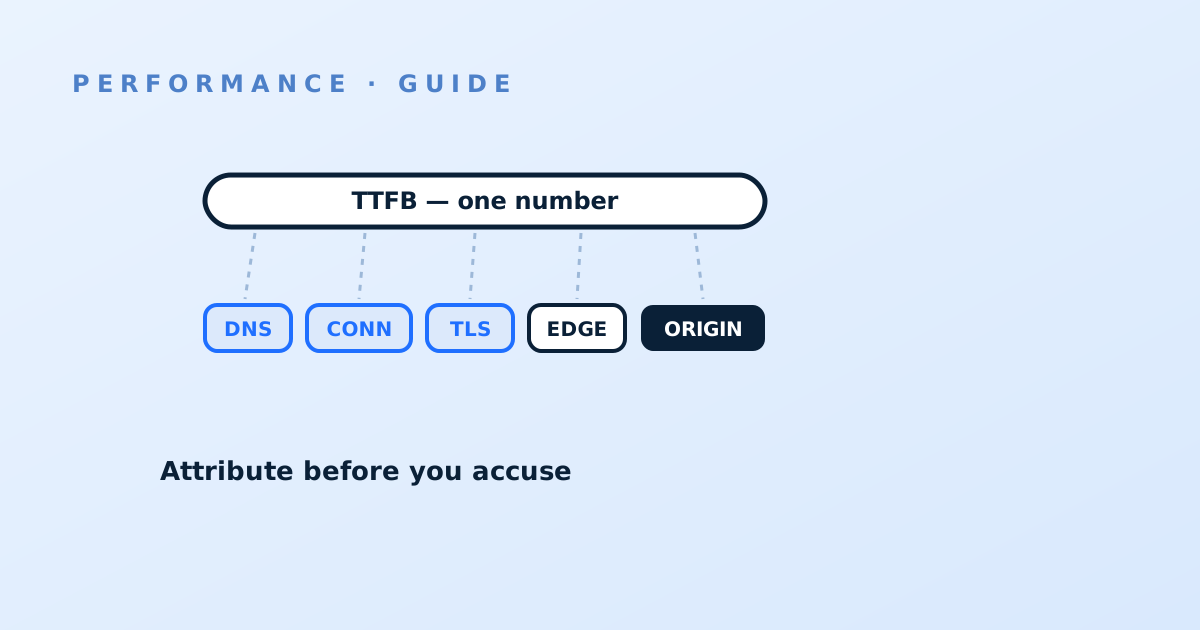
How to measure TTFB properly: edge vs origin attribution.
Performance
How to measure TTFB properly: edge vs origin attribution. One number, five ingredients. Split DNS, connect, TLS, edge and origin before blaming anyone.
 Performance
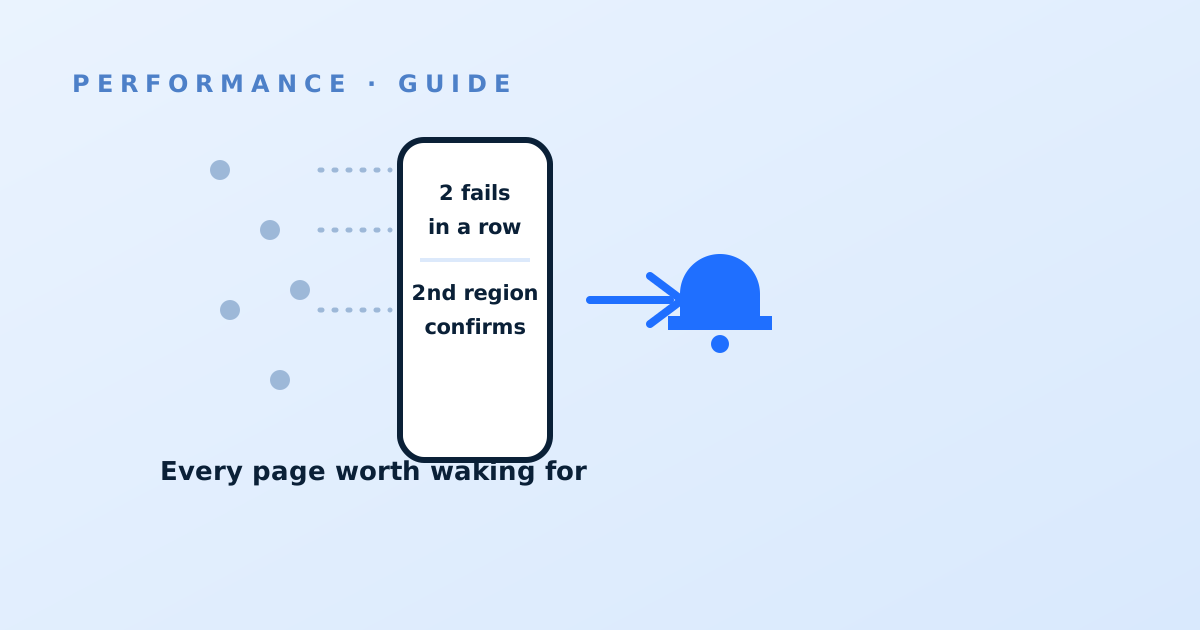
How to run synthetic monitoring that doesn't cry wolf.
Performance
How to run synthetic monitoring that doesn't cry wolf. Fewer checks, better placed, with alert rules a human can defend at 3 a.m.
 Performance
How to deploy RUM: beacon, sampling and the dimensions that matter.
Performance
How to deploy RUM: beacon, sampling and the dimensions that matter. Field data is the truth. Ship the beacon safely, sample sanely, and tag every beacon with the splits you'll need.
 Performance
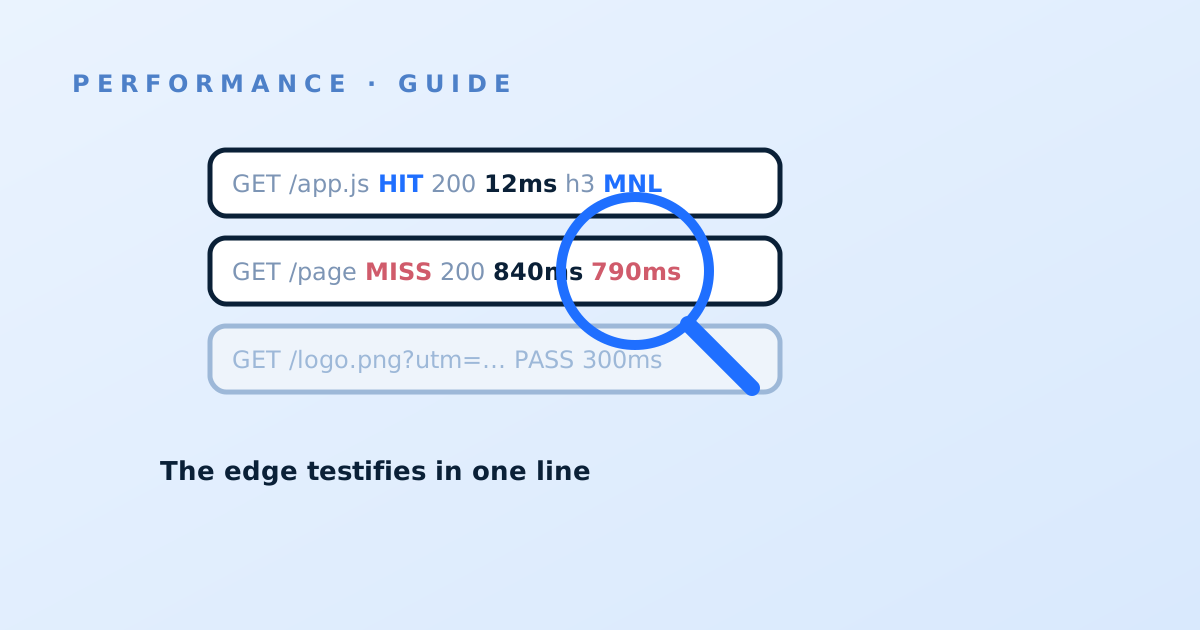
How to read a CDN log line: the fields that explain performance.
Performance
How to read a CDN log line: the fields that explain performance. Cache status, timing pairs, bytes and protocol — the grammar of the edge, one line at a time.
 Choosing a provider
How to benchmark CDNs against each other fairly.
Choosing a provider
How to benchmark CDNs against each other fairly. Same origin, same config, same clients, warmed caches — or the numbers are theatre.
 Performance
How to debug a slow page behind a CDN: a triage flowchart.
Performance
How to debug a slow page behind a CDN: a triage flowchart. Reproduce, split client/edge/origin, then walk the branch. Twenty minutes to an owner, not a shrug.
 Performance
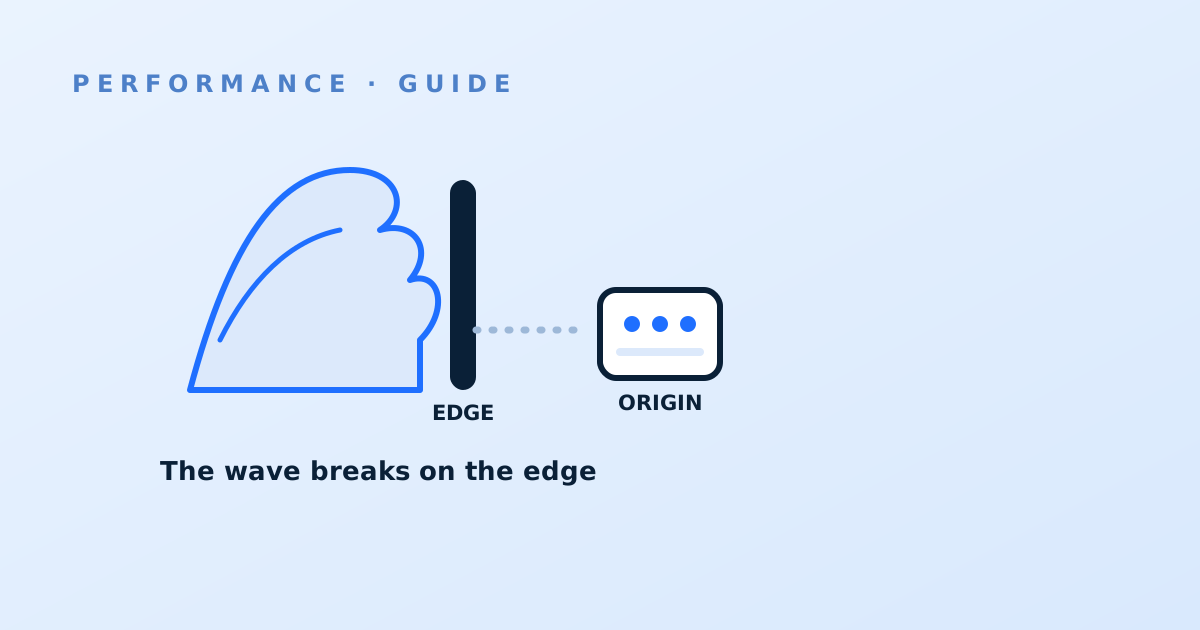
How to warm a cache before a launch or sale day.
Performance
How to warm a cache before a launch or sale day. First users shouldn't pay the miss tax. Build the URL list, warm per POP, verify with headers.
 Performance
How to prepare delivery for a traffic spike: the checklist.
Performance
How to prepare delivery for a traffic spike: the checklist. Forecast, harden origin, pre-stage a degradation plan, warn the vendor, staff the war room.
 Performance
How to reduce origin load: collapsing, keep-alive and shields.
Performance
How to reduce origin load: collapsing, keep-alive and shields. Fewer fetches, cheaper fetches, gentler fetches — the three families between edge and origin.
 Performance
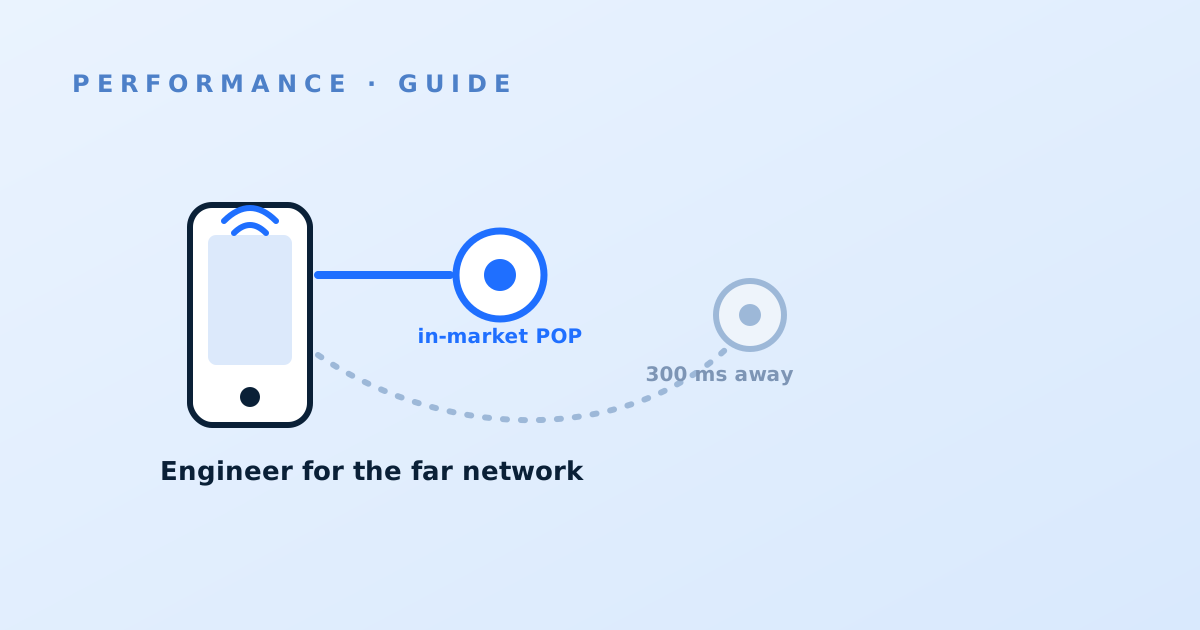
How to speed up mobile delivery in emerging markets.
Performance
How to speed up mobile delivery in emerging markets. High RTT, lossy radio, data-priced users. Engineer for the far network, win everywhere.
 Security
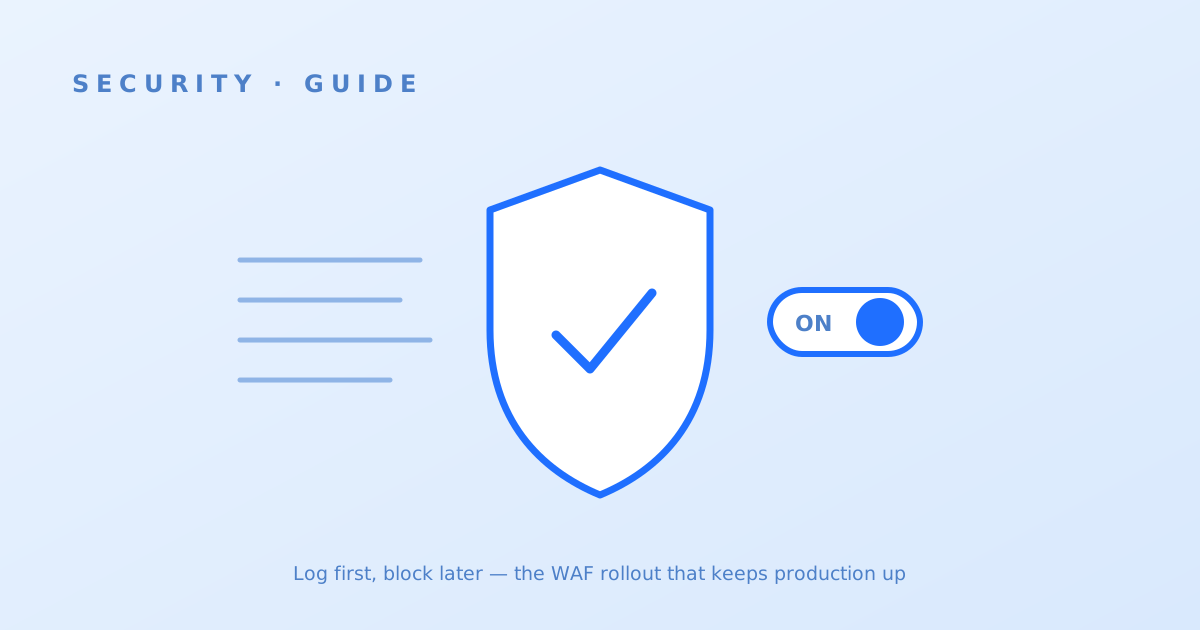
How to switch on a WAF without breaking production.
Security
How to switch on a WAF without breaking production. Observe first, measure the false positives, carve the exceptions, then block in stages — the rollout order that never takes down a checkout.
 Security
How to tune WAF rules: killing false positives methodically.
Security
How to tune WAF rules: killing false positives methodically. Rank rules by friction, classify every match, scope the fix to path and parameter, and regression-test — the loop that ends WAF whack-a-mole.
 Security
How to set up rate limiting: budgets, thresholds, penalties.
Security
How to set up rate limiting: budgets, thresholds, penalties. Pick the counting key, set budgets from measured p99s — not guesses — and choose penalties that de-escalate. Plus the CGNAT trap that burns per-IP limits.
 Security
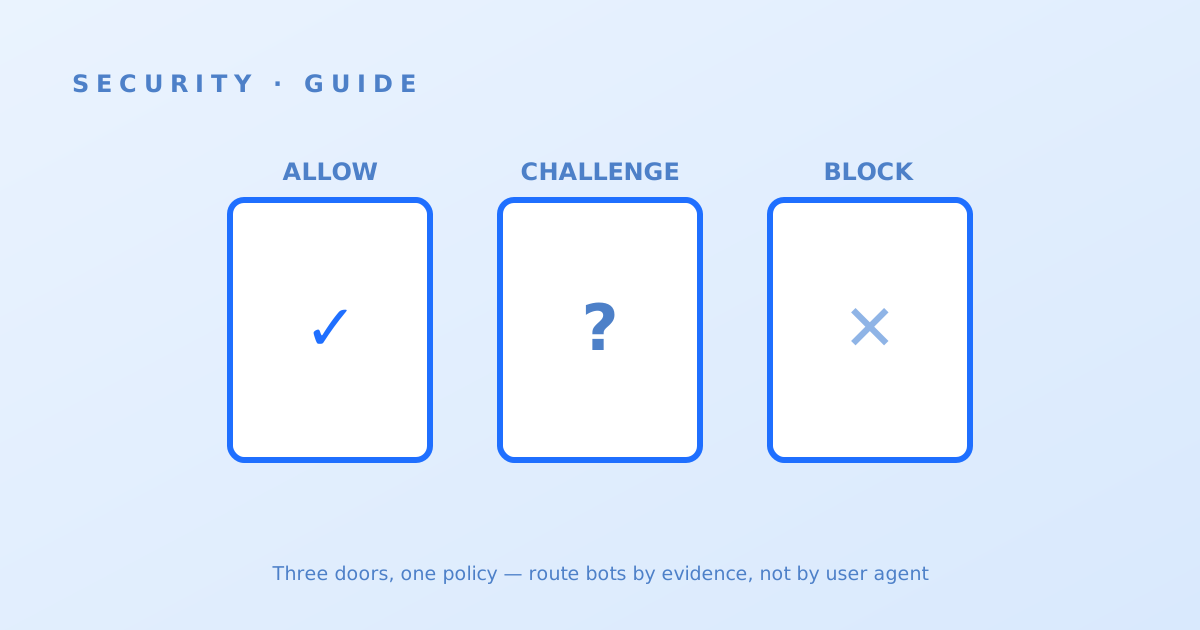
How to configure bot management: allow, block, challenge.
Security
How to configure bot management: allow, block, challenge. Three lanes — verified crawlers pass, hostile automation is blocked, the ambiguous middle gets challenged — and the allowlist that keeps Googlebot and your own app out of the crossfire.
 Security
How to protect your origin: IPs, headers and private connectivity.
Security
How to protect your origin: IPs, headers and private connectivity. Hiding the IP is step one, not the plan. The four-rung ladder: clean IP hygiene, edge allowlists, secret headers or mTLS, and private connectivity when stakes justify it.
 Security
How to implement signed URLs and signed cookies.
Security
How to implement signed URLs and signed cookies. URLs for single objects, cookies for whole libraries; what belongs in the token, dual-key rotation that never locks users out, and the cache-key trap that shreds hit ratio.
 Security
How to set security headers at the edge: a copy-paste baseline.
Security
How to set security headers at the edge: a copy-paste baseline. One edge rule covers every response. The baseline five, the values that fit most sites, and the two headers — HSTS preload and CSP — that punish copy-paste without thought.
 Security
How to prepare for DDoS: the runbook to write before the attack.
Security
How to prepare for DDoS: the runbook to write before the attack. Attacks are survived on a quiet Tuesday: contacts and escalation paths, pre-approved switches, traffic baselines, comms templates — written down before the first packet.
 Security
How to handle certificates on a CDN: issuance, renewal, automation.
Security
How to handle certificates on a CDN: issuance, renewal, automation. Lifetimes collapse from 398 days to 200 now, 100 in 2027, 47 by 2029 — CDN-managed issuance, custom-cert automation, the origin side, and the monitoring that catches what slips.
 Security
How to do geo-blocking and access control at the edge properly.
Security
How to do geo-blocking and access control at the edge properly. A compliance and abuse-shaping tool, not a security boundary: what IP geolocation can and cannot promise, honest 403s vs quiet nulls, and the VPN question answered per use case.
 Security
How to audit your CDN security config: a quarterly checklist.
Security
How to audit your CDN security config: a quarterly checklist. Security decays by drift, not drama. Ten checks in half a day: origin exposure, TLS floor, WAF exceptions, token and access hygiene, dangling DNS — run empirically, from outside.
 Security
How to respond when your CDN is the outage: an incident playbook.
Security
How to respond when your CDN is the outage: an incident playbook. Ride it out or route around it — the answer is decided before the incident: independent detection, an honest diagnosis tree, pre-priced options and the evidence the SLA claim needs.
 Security
How to keep security parity across multiple CDNs.
Security
How to keep security parity across multiple CDNs. Attackers choose which edge to attack, so protection equals the weakest CDN. The parity matrix, portable-vs-native control decisions, token compatibility, and tests that catch drift.
 Streaming & media
How to set up live streaming delivery: from encoder to edge.
Streaming & media
How to set up live streaming delivery: from encoder to edge. One chain from camera to player — and three cache classes with opposite rules. Manifests near-zero, segments long, init fragments forever: the settings that fan one origin out to a million viewers.
 Streaming & media
How to configure VOD delivery: packaging, tokens and TTLs.
Streaming & media
How to configure VOD delivery: packaging, tokens and TTLs. Immutable segments, year-long TTLs, one CMAF copy instead of two, session-scoped tokens that never touch the cache key — VOD is the friendliest workload a CDN has, if you let it be.
 Streaming & media
How to cut video startup time: the first-frame checklist.
Streaming & media
How to cut video startup time: the first-frame checklist. First frame = page + player + manifest chain + init + first segments, all sequential. Shorten the chain, start on the right rung, keep the head of every title hot — the checklist toward one second.
 Streaming & media
How to fight rebuffering: diagnosis and fixes in order.
Streaming & media
How to fight rebuffering: diagnosis and fixes in order. The buffer drained faster than delivery refilled it — but where? Measure, localize by dimension, attribute to ladder, ABR, cache or peering, then fix in the order that usually wins.
 Streaming & media
How to set up low-latency HLS and DASH without regret.
Streaming & media
How to set up low-latency HLS and DASH without regret. Parts, preload hints and blocking playlist reloads take live from 20+ seconds to 2–5 — if packager, CDN and player all cooperate. What each must do, and when standard latency is the wiser buy.
 Streaming & media
How to protect video: tokens, DRM and watermarking, layered.
Streaming & media
How to protect video: tokens, DRM and watermarking, layered. Tokens gate the door, DRM locks the file, watermarking names the leaker — three layers doing three different jobs, applied by content value, not by fear.
 Performance
How to deliver game patches and big binaries on launch day.
Performance
How to deliver game patches and big binaries on launch day. Millions of clients, tens of gigabytes, minute zero. Warn the CDN in writing, pre-warm every chunk, range-split the payload, stagger the rollout — the launch-day playbook.
 Performance
How to serve software updates: ranges, resumes and mirrors.
Performance
How to serve software updates: ranges, resumes and mirrors. Immutable versioned paths, byte-range resumes, deltas for the bandwidth, staged percentage rollouts with a kill switch, and a second path for the bad day — update plumbing done right.
 Streaming & media
How to deliver podcasts and audio at scale.
Streaming & media
How to deliver podcasts and audio at scale. MP3s behind a CDN — plus the traps: measurement prefixes stacking redirects, IAB range-counting rules, release-morning spikes, and RSS polled by every app on earth.
 Streaming & media
How to handle user-generated content delivery safely.
Streaming & media
How to handle user-generated content delivery safely. Every uploaded file is adversary-authored until proven otherwise: signed direct uploads, transcode-everything normalization, a separate cookieless domain, and takedown purges that verifiably land.
 Streaming & media
How to configure SSAI-friendly caching for ad-supported video.
Streaming & media
How to configure SSAI-friendly caching for ad-supported video. Personalize the playlist, never the media: session manifests bypass cache, content and ad segments stay shared, tracking beacons live off the media path — SSAI without the delivery tax.
 Streaming & media
How to run delivery for a live event: capacity maths and rehearsal.
Streaming & media
How to run delivery for a live event: capacity maths and rehearsal. Concurrency × bitrate = the terabits you must book, not hope for. The worked capacity maths, provider bookings in writing, the dress rehearsal, and the war-room ladder for the night.
 Streaming & media
How to pick QoE metrics for video and wire them to alerts.
Streaming & media
How to pick QoE metrics for video and wire them to alerts. Four numbers tell the story: startup time, stall ratio, delivered quality, failure rate — measured at the player, cut by ASN/CDN/device, alerted on the cuts where trouble actually starts.
 Multi-CDN
How to decide if you need multi-CDN: the honest scorecard.
Multi-CDN
How to decide if you need multi-CDN: the honest scorecard. It buys availability, reach and leverage; it costs engineering, parity and hit ratio — forever. Five scored questions that end the debate with a defensible yes, no, or not-yet.
 Multi-CDN
How to design a multi-CDN architecture: the patterns compared.
Multi-CDN
How to design a multi-CDN architecture: the patterns compared. Active-passive, weighted active-active, performance steering, client-side switching — four patterns, rising in power and demands. Choose by what must survive, not by what demos well.
 Multi-CDN
How to set up DNS-based CDN steering, step by step.
Multi-CDN
How to set up DNS-based CDN steering, step by step. Weighted CNAMEs, health checks that test what users need, TTLs low enough to act and high enough to survive — and the resolver realities that decide how fast steering really is.
 Multi-CDN
How to keep configurations in sync across CDNs.
Multi-CDN
How to keep configurations in sync across CDNs. Two rule engines, one intended behaviour: express intent in code, translate per platform, push every change through one process, and let a cross-edge test suite — not memory — prove parity.
 Multi-CDN
How to split traffic across CDNs: ratios, geos, workloads.
Multi-CDN
How to split traffic across CDNs: ratios, geos, workloads. Three axes decide who serves what: ratios sized to commits and confidence, geographies assigned on measured evidence, workloads homed where each platform is strongest — reviewed on a calendar.
 Multi-CDN
How to fail over between CDNs without dropping sessions.
Multi-CDN
How to fail over between CDNs without dropping sessions. The traffic moves in minutes; the craft is what survives the move: sessions independent of the edge, tokens and certs valid on both, the long-poll tail handled, the drill rehearsed.
 Multi-CDN
How to run multi-CDN for video: mid-stream switching setup.
Multi-CDN
How to run multi-CDN for video: mid-stream switching setup. Segments make video uniquely switchable: retry-on-failure, standardized content steering, or full player-side selection — three tiers from insurance to per-segment optimization.
 Multi-CDN
How to use zero-egress storage as a multi-CDN origin.
Multi-CDN
How to use zero-egress storage as a multi-CDN origin. Two CDNs means twice the origin fetches — and cloud egress bills every byte. A neutral zero-egress store as the shared origin removes the tax; here is the setup and the fine print.
 Multi-CDN
How to add edge compute without locking yourself in.
Multi-CDN
How to add edge compute without locking yourself in. Every edge runtime is someone’s walled garden. Keep the logic thin, code to web-standard interfaces, treat vendor state as a cache, and keep a ledger of every tie you accept.
 Multi-CDN
How to migrate between CDNs: the reverse cutover playbook.
Multi-CDN
How to migrate between CDNs: the reverse cutover playbook. Build the destination in shadow, prove it with the parity suite, move traffic in percentage waves with the return path open, and only then — deliberately — decommission the source.
 Multi-CDN
How to test a CDN you’re not using yet: shadow traffic setups.
Multi-CDN
How to test a CDN you’re not using yet: shadow traffic setups. Evaluate with your traffic, not their brochure: log-driven replay, side-by-side response diffing, then a real dark-launch slice — three fidelities of shadow, run with provider etiquette.
 Multi-CDN
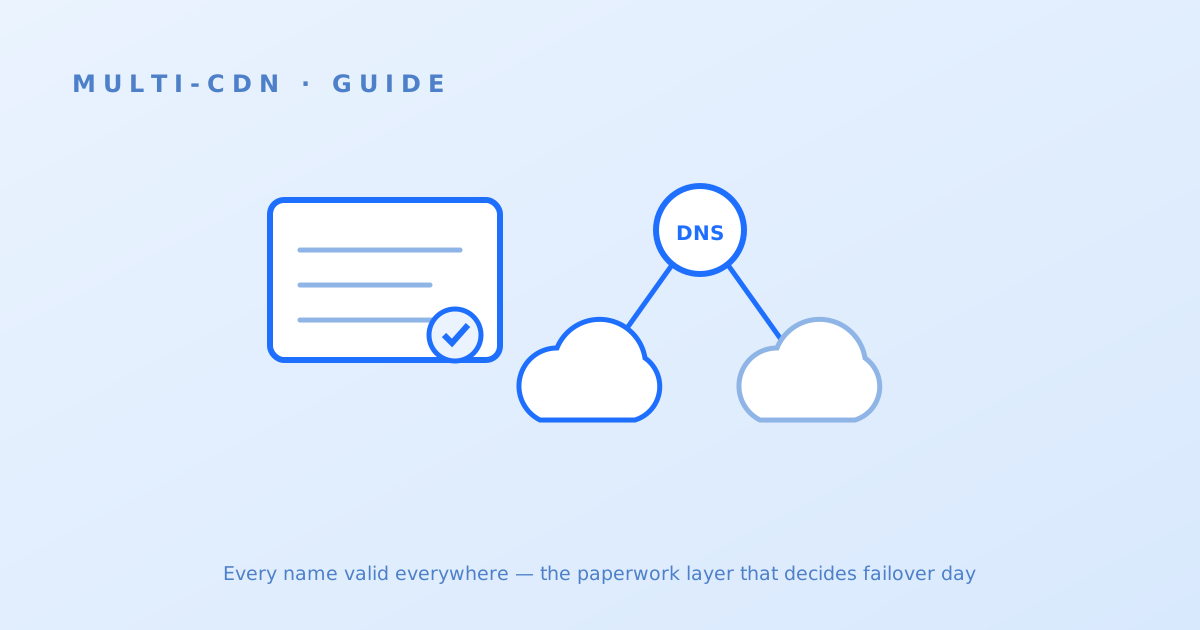
How to manage certificates and DNS across a multi-CDN estate.
Multi-CDN
How to manage certificates and DNS across a multi-CDN estate. Every hostname, valid on every platform, on 200-day-and-shrinking lifetimes — plus a DNS layer promoted to control plane. The delegation patterns and monitoring that keep it boring.
 Multi-CDN
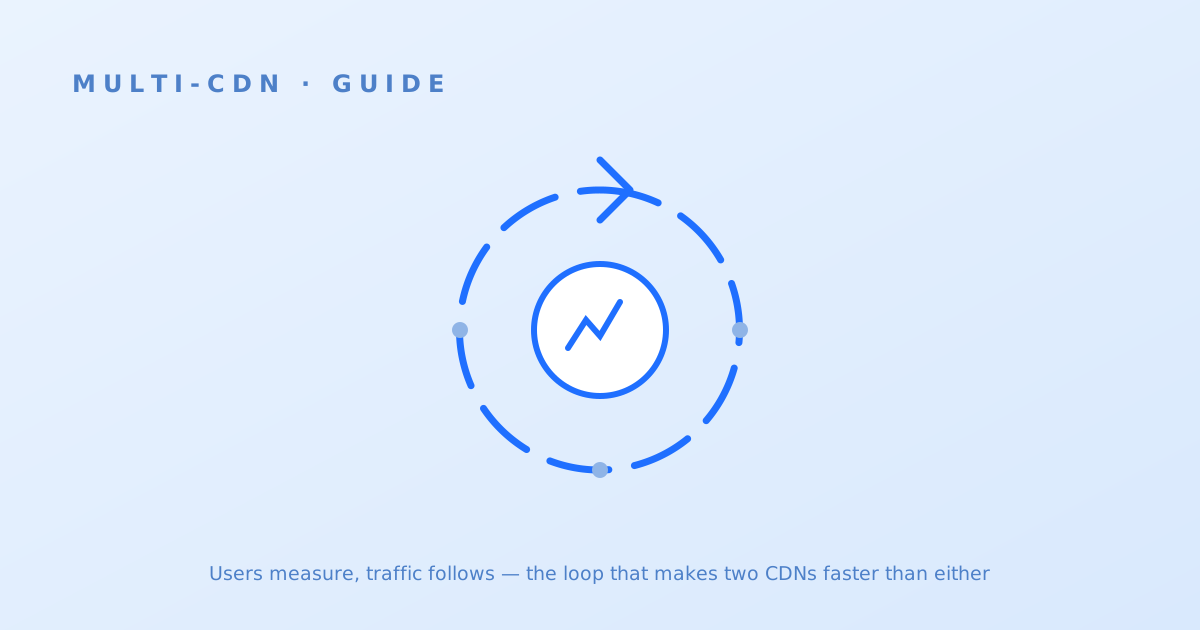
How to steer on RUM data: closing the measurement loop.
Multi-CDN
How to steer on RUM data: closing the measurement loop. Users measure, traffic follows: per-ASN-per-CDN scores from your own RUM, decision rules with damping and minimum samples, and guardrails that keep the control loop from oscillating.
 Contracts & pricing
How to read your CDN invoice: every line item decoded.
Contracts & pricing
How to read your CDN invoice: every line item decoded. Regional tiers, request fees, feature add-ons, support percentages, overage — each line decoded, reconciled against your own logs, and checked for the drift that creeps in quietly.
 Contracts & pricing
How to forecast CDN spend: three methods that work.
Contracts & pricing
How to forecast CDN spend: three methods that work. Trend extrapolation for the base, driver-based modelling for the why, event build-up for the spikes — combined with error bands and refreshed monthly. Plus when each method lies.
 Contracts & pricing
How to size a commit: the maths of over- and under-committing.
Contracts & pricing
How to size a commit: the maths of over- and under-committing. Undercommit pays overage on the excess; overcommit pays for ghosts. The break-even maths across your forecast distribution, a worked example, and the terms that soften both tails.
 Contracts & pricing
How to cut your CDN bill this quarter: ten levers, ranked.
Contracts & pricing
How to cut your CDN bill this quarter: ten levers, ranked. Configuration beats negotiation on speed: hit ratio, compression, image bytes, log diet, request count, regional mix, storage moves, feature audit, commit fit, split leverage — ranked by payback.
 Contracts & pricing
How to tag and allocate CDN spend to products.
Contracts & pricing
How to tag and allocate CDN spend to products. A shared invoice is an unowned invoice. Map hostnames and paths to products, meter usage from logs, rate it into money, split the shared remainder by written rules — and publish it monthly.
 Operations
How to set delivery SLOs: targets your team can defend.
Operations
How to set delivery SLOs: targets your team can defend. Not the vendor’s SLA and not a wish: user-centric SLIs, targets derived from your own baseline, and error budgets that actually gate releases and spending decisions.
 Contracts & pricing
How to run a CDN vendor QBR: the agenda that gets results.
Contracts & pricing
How to run a CDN vendor QBR: the agenda that gets results. Take the meeting back: your scorecard opens, incidents arrive with asks attached, the commercial position is stated plainly, and every item leaves with an owner and a date.
 Contracts & pricing
How to claim SLA credits: evidence, process, expectations.
Contracts & pricing
How to claim SLA credits: evidence, process, expectations. Credits are claimed, not granted: know the SLA’s measurement rules before the incident, capture independent evidence during it, file inside the deadline — and price the credit honestly.
 Operations
How to document your delivery estate on one page.
Operations
How to document your delivery estate on one page. Hostnames, providers, origins, DNS, certs, contacts, contract dates, runbook links — one page, in version control, linked from the incident channel, and kept true by habit, not heroics.
 Operations
How to train your team on CDN operations: a 30-day plan.
Operations
How to train your team on CDN operations: a 30-day plan. Week one: concepts and the estate tour. Week two: logs, purge, dashboards hands-on. Week three: real changes, supervised. Week four: drills. Signed off against a checklist, not vibes.
 Operations
How to plan CDN capacity for the year ahead.
Operations
How to plan CDN capacity for the year ahead. The edge scales; your obligations don’t scale themselves. Seasonal curve, event calendar, regional growth, provider notification thresholds, and a written headroom policy — one page, reviewed quarterly.
 Operations
How to run an annual delivery review: the full-estate audit.
Operations
How to run an annual delivery review: the full-estate audit. The year, accounted for: traffic and spend vs forecast, SLO attainment, incident themes, security and vendor posture — compressed into next year’s decisions, owners attached.