
Renewals are won on calendar position and information, not charm. A renewal started 30 days out is a price announcement; started 120 days out with a benchmark in hand, it is a negotiation. Here is the sequence.
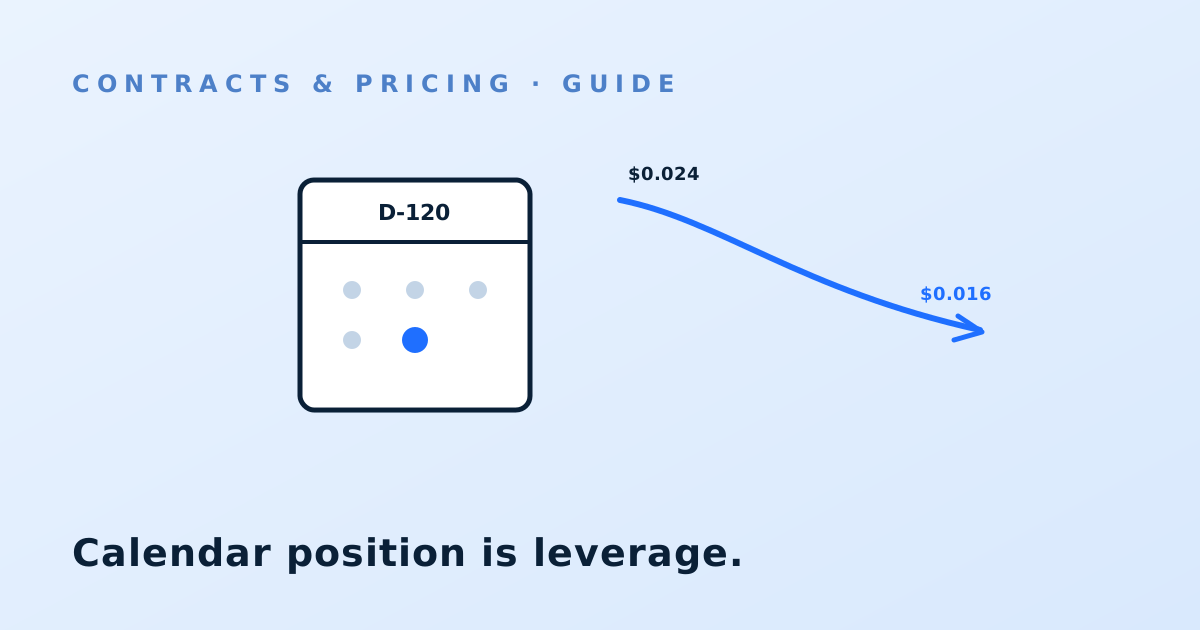
Day 120: assemble your own numbers
Before any vendor conversation, pull twelve months of your own data: monthly delivered TB by region, peak-to-average ratio, hit ratio, overage incidents, SLA breaches and credits claimed, and support tickets with resolution times. This is your side of the table. The vendor has perfect information about your usage; walking in without it is negotiating your own bill from memory.
Day 105: establish the market anchor
Get two genuine alternative quotes at your real volumes — not list prices from pricing pages, actual quotes against your traffic profile. You do not need to intend to move; you need the number to be real, because “we’re benchmarking the renewal” is only leverage when it is true. This is also where a buying pool or advisor earns its keep: pooled-volume rates are an anchor an individual buyer cannot generate alone.
Day 90: open with structure, not price
Ask for the renewal proposal in writing, then negotiate structure before rate: commit level re-based to your actual trailing volume (the single most common overpayment is a legacy commit sized for a 2022 traffic forecast), overage equal to committed rate, renewal-increase cap, and support tier included. Structural concessions cost the vendor less than headline-rate cuts, which is exactly why they are easier to win — and they usually save more money.
Day 60: the rate conversation
Now anchor the rate against your quotes, per region, not blended — blended rates hide the region where you are overpaying 3×. A credible ask references volume: “at 400 TB/month, the market prices this traffic at X; we need you within 10% of X.” Expect the counter to arrive as added value (more support, bundled features) rather than price; accept only what you would have paid for anyway, and translate the rest back into rate.
Day 30: close or extend, never drift
If terms are close, close. If not, a 3-month extension at current rates beats renewing badly — and vendors grant extensions readily because the alternative is a live migration conversation. What you must not do is drift past the auto-renewal notice date you calendared at signature; missing it converts every lever above into a courtesy. The renewal you sign should leave one artifact for next time: this year’s numbers filed where day 120 of the next cycle will find them.