
The most dangerous deploys in your estate may not be application releases: an edge configuration change propagates globally in seconds-to-minutes and sits in front of every request. The industry’s worst outages, including the famous CDN incidents our multi-CDN articles cite, were config pushes. Treat the layer accordingly.
Configuration as code, non-negotiable
Edge config living only in a vendor dashboard is unreviewable, unrollbackable and undiffable, three properties incidents feast on. Export it to declarative form (vendor Terraform providers and config APIs make this standard now), review changes as pull requests, and let CI validate: syntax, forbidden patterns (naked wildcards, cache-key regressions), and a staging apply. The Edgio post-mortem’s migration lesson applies daily, not just at vendor death: portable config is exit-readiness and deploy-safety in one artifact.
Canarying an edge change
Global instant propagation is the feature and the threat; canarying restores gradualism. Mechanisms, in rough order of preference: percentage-based traffic splitting where the platform supports it, a staging hostname carrying mirrored or synthetic load, single-POP or single-region activation, and header-gated rules that only fire for test cookies. Watch the canary with the metrics that config breaks: error rate, cache hit ratio, p95, origin request rate, not just does the site load.
The organizational failure mode is worth naming because tooling alone does not fix it: edge configuration commonly lives in an ownership gap between platform, application and whoever set the CDN up years ago, and unowned config accretes, contradictory rules, dead hostnames, mystery exceptions nobody dares touch. The audit that fixes it is archaeological: inventory every rule, attribute an owner and a reason, delete the orphans in staged batches, then enforce the pipeline above so accretion cannot resume. We run these audits regularly, and the deleted-rule count is reliably the client’s least favorite and most valuable number in the report.
Rollback as a first-class artifact
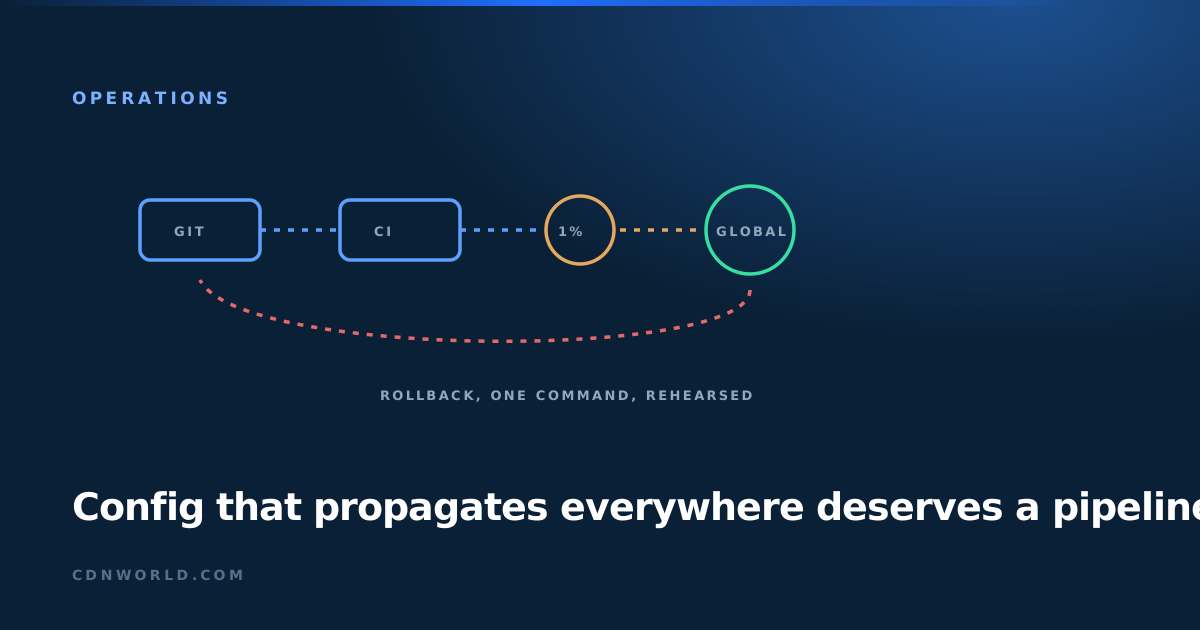
Every change ships with its inverse: the previous config version tagged and one command away. Verify rollback propagation speed empirically, it is your real mean-time-to-recovery, and rehearse it. The pathological case is config that migrates state (new cache keys, changed origins): document whether rollback restores behavior or merely restores text, because a rolled-back cache-key change still left the cache repopulated under new keys.
In practice
The full loop: config in git, PR review with a delivery-literate approver, CI validation, staged canary with metric gates, global promote, tagged rollback standing by. It is exactly your application deploy pipeline pointed at a different artifact, and estates that adopt it stop having edge-config incidents almost entirely, not because changes stop being wrong, but because wrong changes stop reaching everyone.
Config archaeology plus pipeline setup is one of our most requested engineering engagements. The diff is the deliverable.