
Cloud egress is one of the least loved lines in any infrastructure budget. It is also one of the few a CDN decision directly shrinks, which makes cache strategy a finance topic wearing an engineering costume.
The mechanism
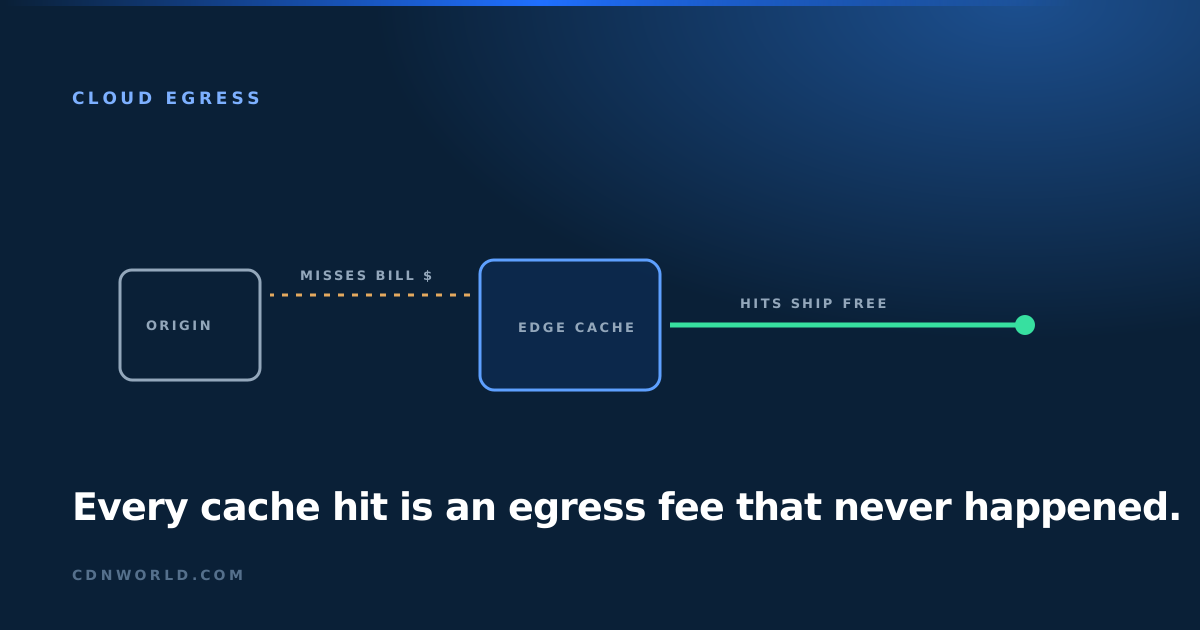
When a CDN serves a request from its edge cache, your origin never sees it, and your cloud provider never charges egress for it. A cache hit ratio moving from 80% to 95% cuts origin egress for that traffic by three quarters. On serious volume that difference funds the entire CDN line. Finance teams often discover this lever late because the two lines live in different budgets: the CDN in one, cloud egress in another, and nobody owns the sum.
Where the savings hide
Static assets are the obvious win, but the real money is usually in the almost-cacheable: API responses with short but non-zero freshness, personalized pages with cacheable fragments, and media segments that default configurations fetch more often than needed. Tightening cache keys and honoring longer TTLs where correctness allows is unglamorous, high-yield work. The almost-cacheable category rewards a specific conversation between engineering and whoever owns correctness: what is the true tolerable staleness of each response type, in seconds, agreed and written down. The number is almost always higher than the configuration assumes.
The organizational fix matters as much as the technical one. Assign a single owner to the combined delivery-plus-egress number, reviewed monthly, with cache hit ratio on the same page. In companies without that owner, we routinely find the CDN team celebrating a cheap per-GB rate while the cloud bill quietly absorbs the misses that rate produced. The two lines are one system; budgeting them separately guarantees nobody optimizes the system. The single-owner pattern costs nothing to implement and, in our engagements, has surfaced five-figure annual savings more reliably than any tooling purchase.
Counting it honestly
Model the full picture: CDN delivery cost plus residual origin egress, versus your current origin bill. In most profiles we assess, the combined line is lower, sometimes dramatically, and the performance gain arrives as a side effect rather than the justification. Beware the reverse error too: a rock-bottom CDN rate that produces poor hit ratios can cost more in origin egress than it saves in delivery. The cheapest per-GB quote is not automatically the cheapest architecture.
In practice
Pull one month of cloud egress billing and your CDN’s hit-ratio report. Multiply your miss rate by your origin egress rate and you have the monthly cost of every percentage point of cache inefficiency. That number, in your currency at your volume, is the business case for the tuning work this article describes.
The assessment includes this exact model on your traffic, with the cache assumptions shown rather than hand-waved.