
It surprises buyers every time: the same Akamai or CDNetworks service, cheaper through a reseller than direct. No trick is involved, just economics that favor aggregation.
Aggregation reaches deeper tiers
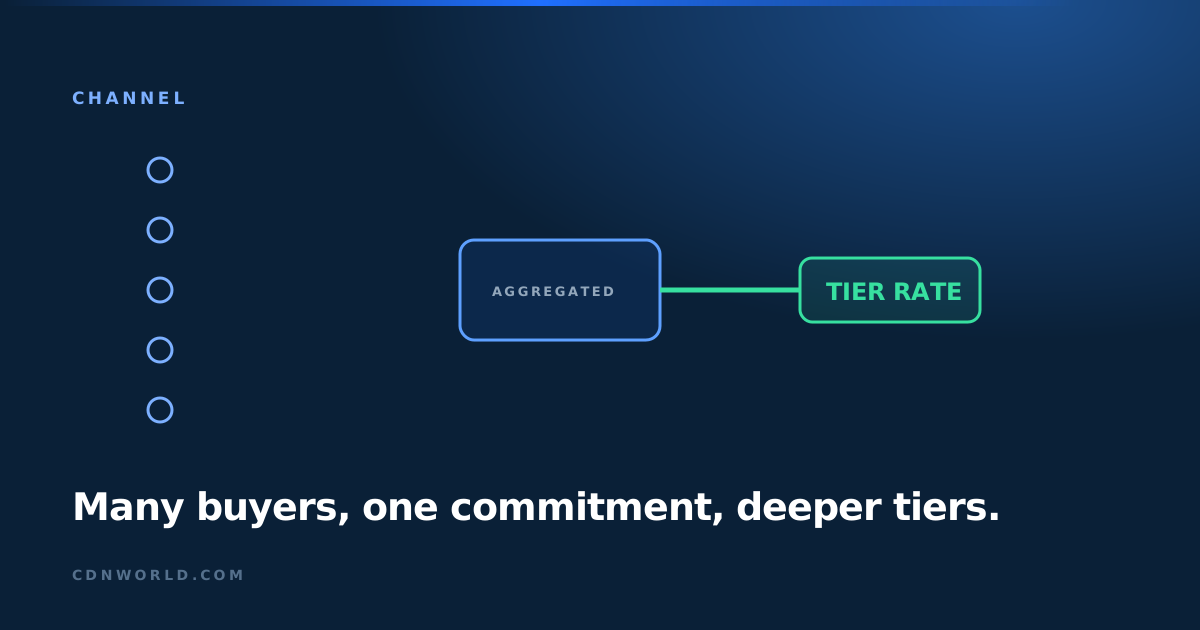
Providers price by volume, and an aggregator commits the combined traffic of many clients. That combined volume sits far down the rate curve, at tiers an individual buyer of moderate size cannot reach alone. Each client inherits a slice of that position. The arithmetic is unromantic: a provider’s blended cost of acquiring revenue through the channel is simply lower, and competitive channels pass most of that difference forward.
The channel carries the cost of sale
Enterprise sales are expensive: account teams, solution engineers, long cycles. When a reseller brings a closed, onboarded customer, the provider skips most of that cost and shares the difference. Channel discounts are not charity; they are the provider buying distribution. This is also why channel pricing survives scrutiny that discount gimmicks would not: it reflects a real cost difference in the provider’s business, not a promotional budget that expires.
The model has one more property worth understanding: alignment through renewal. A reseller earns over the life of the relationship, which means their economics reward you staying voluntarily, not being trapped. That is why credible channel partners run clean exit terms and native platform access, the opposite of lock-in. An intermediary confident in their value makes leaving easy, because ease of exit is precisely what forces them to keep earning the margin. When you meet the opposite pattern, exit friction and proxied access, you have met someone whose economics depend on the door being heavy.
What to check before buying through anyone
Three things: that you get the provider’s own portal and support rather than a proxy, that the reseller is open about how they are compensated, and that leaving is contractually clean. Any intermediary who fails those tests is capturing value rather than adding it. The transparency test matters most. An intermediary who will not describe how they are paid is asking you to price their incentives blind, which is exactly the black-box dynamic that gives brokers a bad name.
In practice
Practical diligence takes one email: ask the reseller which portal you will log into, who answers the phone at 3 a.m., what happens contractually if you leave, and how they are remunerated. Compare the answers against buying direct. When aggregation is genuine, the answers are boring, the rates are lower, and boring is precisely what you want from infrastructure.
We pass both tests in writing: native platform access, disclosed remuneration, and a report you keep either way.