
HTTP/3 replaced the transport under the web with QUIC, and the marketing around it often outruns the measurements. The real gains are real, unevenly distributed, and worth understanding before you chase them.
Where the gains concentrate
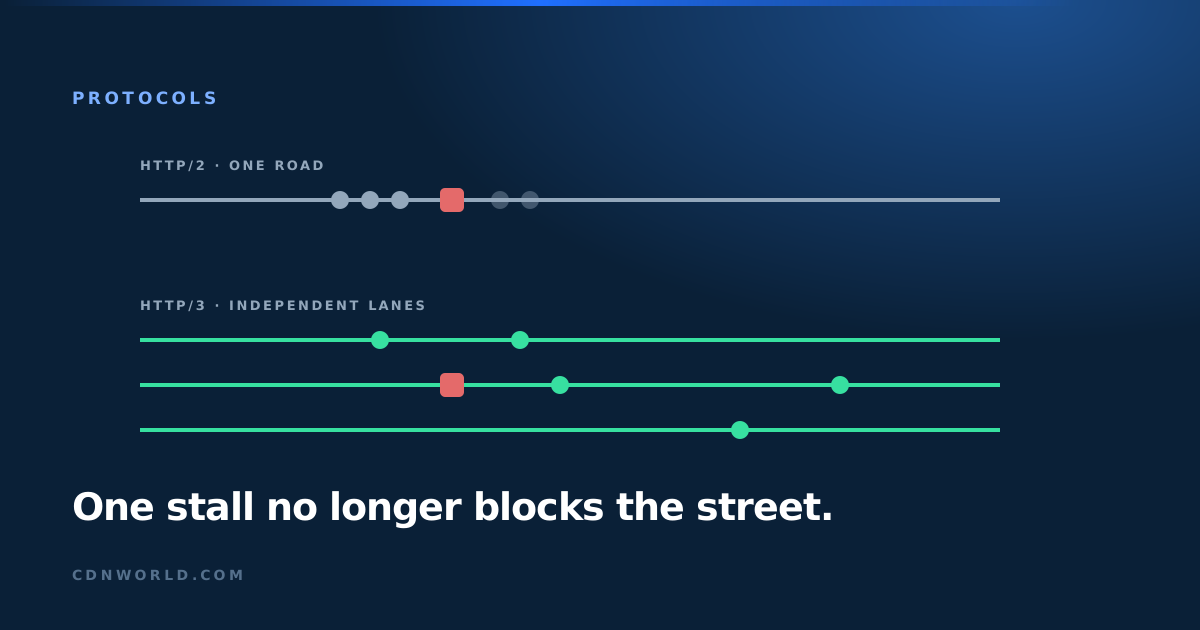
QUIC removes head-of-line blocking and speeds connection setup, which pays most on lossy and high-latency paths: mobile networks, congested regions, long distances. Users on clean fiber near a POP barely notice; users on hotel wifi in another hemisphere notice plenty. The pattern is familiar from every transport upgrade in web history: dramatic in the conditions it was designed for, invisible in the conditions that were already fine.
The honest caveats
Some middleboxes and networks still handle UDP poorly, so graceful fallback to HTTP/2 matters. Server and CDN implementations vary in maturity. And protocol gains cannot rescue an uncached, unoptimized site; they compound good delivery rather than substitute for it. Fallback quality is itself a differentiator: a provider whose HTTP/3 degrades cleanly to HTTP/2 under middlebox interference protects exactly the users the upgrade was meant to help.
Connection migration is the QUIC capability that deserves more attention than it receives: sessions survive network changes, the phone moving from wifi to cellular mid-request, without renegotiation. For mobile-heavy audiences this converts a whole class of stalls and retries into seamless continuity. It is also invisible in most benchmarks, because test rigs do not walk out of buildings mid-transfer while real users do constantly. If your traffic skews mobile, weight this property specifically when comparing provider implementations; it is where the protocol’s design earns its keep off-chart.
What buyers should require
HTTP/3 on by default, per-protocol analytics so you can see adoption and gains in your own traffic, and honest regional data. The badge in this site’s speed receipt turns green on HTTP/2 and HTTP/3 for exactly this reason: transport is worth verifying, not assuming. Verification beats assumption because deployment claims and default-on reality diverge more often than datasheets admit, and the check takes seconds in any browser’s network panel.
In practice
Check three things on your own traffic: what share of requests actually negotiate HTTP/3 today, how the p95 differs between protocol cohorts in your weakest regions, and whether your provider’s analytics can even answer the first two questions. If the mobile and long-distance cohorts show the gains the protocol promises, the upgrade is already paying; if the analytics cannot show cohorts at all, that is your finding instead.
Protocol posture is one line of our provider benchmark. It is rarely the deciding line, and always worth checking.