
Images remain the heaviest thing most pages ship, which makes image delivery the most improvable line on many performance budgets, and increasingly a CDN feature rather than a build step.
The format layer
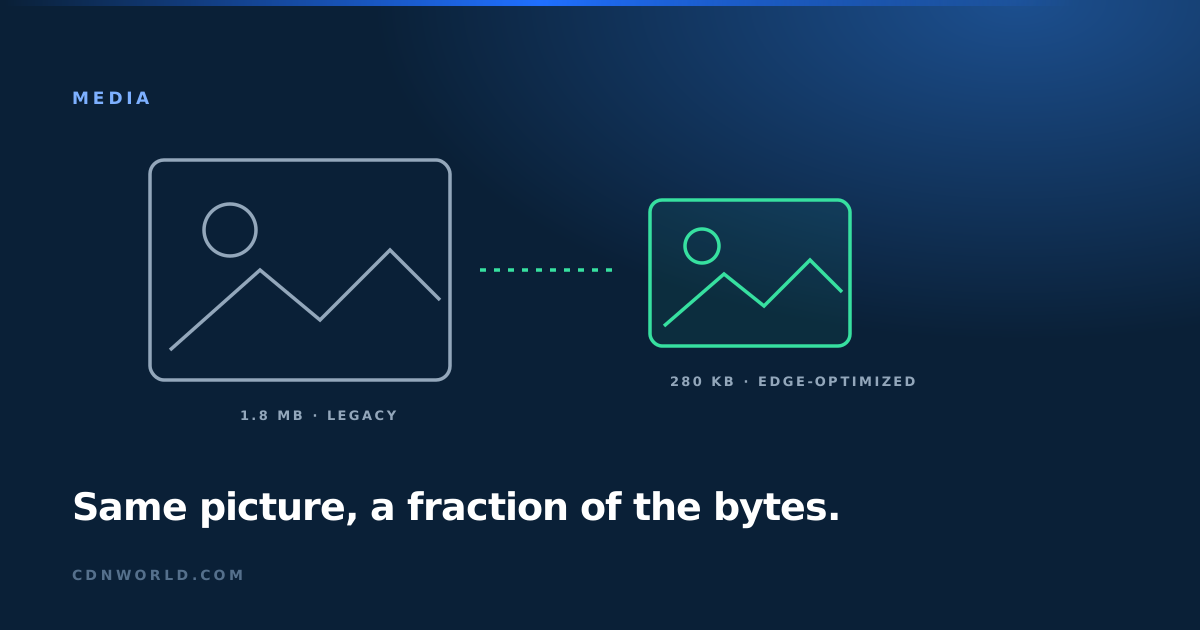
Modern formats cut file sizes dramatically at equal visual quality versus legacy JPEG and PNG. Edge-based format negotiation serves each browser the best format it accepts from a single source image, removing the build-pipeline excuse entirely. Heaviness compounds quietly: pages accrete images faster than they shed them, and last year’s tuned page is this year’s heavy one without anyone deciding anything.
The sizing layer
Serving a desktop-sized image to a phone wastes most of its bytes. Edge resizing from a master image, driven by device hints, is now table stakes on serious platforms, and the bandwidth saved is bandwidth unbilled. The single-master pattern also removes a whole category of production errors: no more stale pre-generated variants, no more format matrices in the build, one source of truth transformed on demand.
A quality warning that saves arguments later: automated optimization needs a visual-quality floor agreed with whoever owns the brand. Aggressive compression settings that thrill the performance dashboard can perceptibly soften product photography, and the first stakeholder to notice will be the one you least wanted to. The mature pattern sets quality thresholds per image class, product imagery conservative, decorative assets aggressive, and validates with side-by-side review before rollout. The savings survive almost intact, and the brand conversation happens once, in advance, instead of repeatedly, in escalation.
The economics
Image optimization pays twice: faster LCP on exactly the elements Google grades, and a materially smaller delivered-GB line. Providers price these features differently, per transformation, per request or bundled, and the pricing model changes which architecture is cheapest at your volume. Pricing-model fit is worth a real calculation: transformation-priced services suit catalogs with many variants of few images, while request-priced ones suit the reverse, and the wrong pairing quietly doubles the line.
In practice
Audit one representative page: total image bytes as shipped, versus the same images in modern formats at device-appropriate sizes. The percentage saved, applied to your monthly image gigabytes at your delivery rate, is the annual value of edge image optimization for your catalog, computed in ten minutes. In most audits we run, that number funds the feature several times over, before counting the LCP improvement that arrives with it.
We model image optimization economics inside the assessment, because the feature frequently pays for the plan.