
Add a second CDN and something subtle happens to your first one: its cache gets worse. Nobody puts that slide in the deck, so here it is in prose.
Why it happens
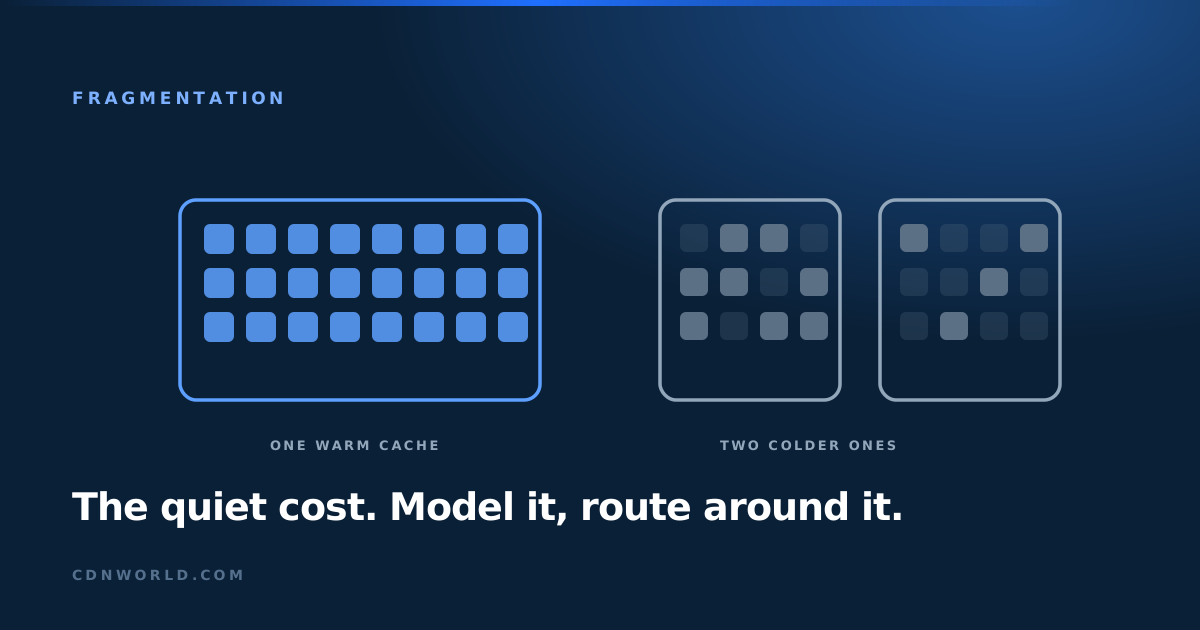
A cache warms by seeing requests. Split traffic two ways and each network sees half the request stream, so each holds a colder cache: lower hit ratios, more origin fetches, higher origin egress, and a latency penalty on exactly the long-tail content caching exists to save. The silence is structural: the people selling the second network and the people selling the steering both benefit from the slide staying out of the deck.
How much it matters
It depends on your content’s popularity curve. Concentrated catalogs, where a small set of objects dominates, barely notice. Long-tail-heavy catalogs, large VOD libraries, vast image sets, feel it materially, and should model it before signing anything. Popularity-curve analysis sounds academic and takes an afternoon: rank a month of requests by object, and the shape of that curve is the size of your fragmentation exposure.
Origin shielding changes the fragmentation math enough to deserve restating as design doctrine: with each network routing misses through its own shield layer, your origin sees each object roughly once per network per freshness window, rather than once per POP. The fragmentation cost then concentrates at the shield tier, where hit ratios recover substantially. Combined with content-class routing, shielded multi-CDN architectures routinely land within a few points of single-network cache efficiency, which converts fragmentation from an argument against the architecture into a line item within it, modeled, contained and priced.
Containing it
Route by content class rather than randomly: one network owns the long tail, both share the head. Use origin shielding on each network. And weight steering so the secondary earns traffic where it wins, rather than splitting everything evenly out of a sense of fairness. Content-class routing also simplifies operations as a side effect: each network’s configuration serves one coherent job instead of a blended compromise.
In practice
Before signing the second contract, model three numbers: current blended hit ratio, projected per-network hit ratios under your intended split, and the origin-egress cost of the difference. If the delta is small, proceed happily. If it is large, route by content class rather than percentage, and revisit the projection with that design. Ten minutes with real logs beats every generic assurance in the industry.
Our multi-CDN designs model fragmentation on your actual popularity curve before you commit to anything.