
CDN comparisons,
without the vendor deck.
Written by people who benchmark these networks for a living, and who get paid the same whichever one you choose.
- Bout 2Akamai vs Cloudflare
- Bout 3Fastly vs Cloudflare
- Bout 4Cloudflare vs CloudFront
- Bout 5CDNetworks vs Akamai
Trusted by 100+ enterprises worldwide

Every comparison, measured.
Every provider pairing we’ve benchmarked, from the global majors to the regional specialists.
Bunny.net vs CloudFront: Cheap Bytes or AWS Flat-Rate Plans?
A published per-GB rate card against CloudFront's new bundled monthly plans, with the traffic shapes where each one wins.

Cloudflare vs bunny.net: bundled platform or metered pipe?
Unmetered per-zone plans against transparent per-GB rates — and the content-type clause that decides it.

Akamai vs Gcore: incumbent grid or challenger edge?
The largest distributed platform against the European challenger, both selling edge AI in 2026.

CDNetworks vs CloudFront: APAC reach or AWS gravity?
In-country Asian delivery against the hyperscaler default — and the egress term that decides it.

Bunny.net vs Fastly: cheap bandwidth or programmable edge?
Flat commodity bytes against a programmable real-time edge. Which one your workload actually needs.

Gcore vs CloudFront: AWS-native breadth or edge AI?
Deep AWS integration against edge AI inference and under-served-market reach.

Akamai Bot Manager vs Cloudflare Bot Management.
Adaptive per-app tuning against network-scale scoring and graduated challenges.
Akamai vs Fastly: scale against the real-time edge.
The largest, longest-established edge platform against the developer-centric real-time network — pricing posture and who each fits.
Akamai vs Cloudflare: two philosophies of enterprise edge.
Scale and security heritage against the bundled everything-network.
Fastly vs Cloudflare: a close call your traffic decides.
Instant config and developer tooling against breadth and bundling.
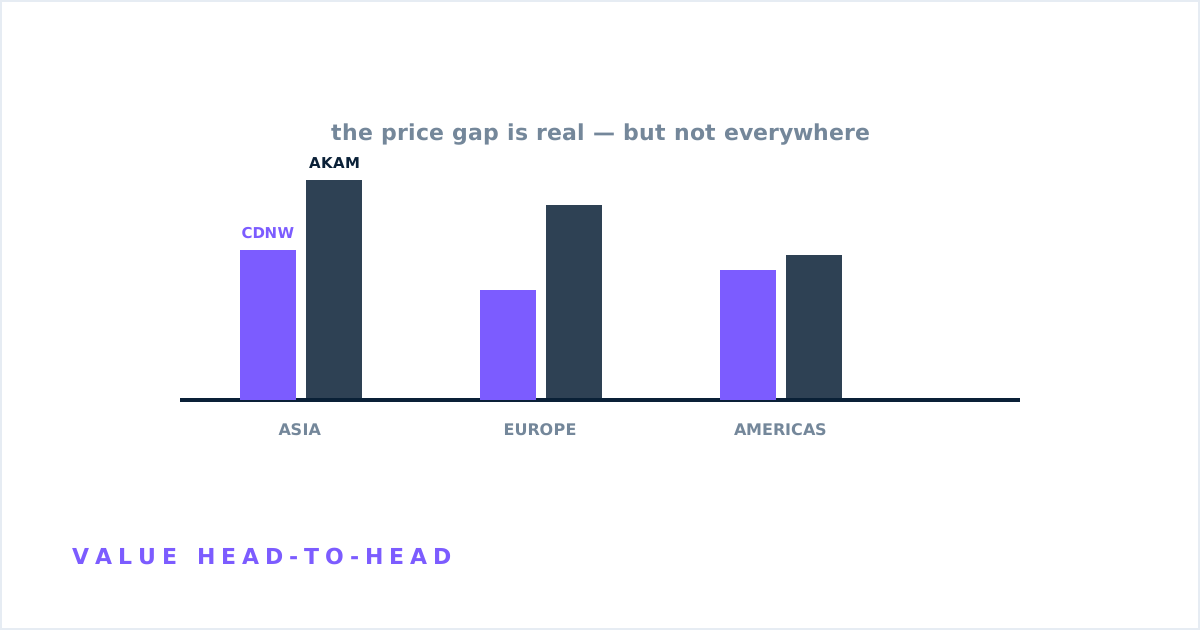
CDNetworks vs Akamai: where the price gap is real.
The Asia-strong value network against the industry incumbent — and where the gap isn’t.

Cloudflare vs AWS CloudFront: bundle vs ecosystem gravity.
When AWS-native convenience is worth it, and when it isn’t.
Imperva CDN vs Reblaze (Link11): security-first delivery.
When the WAF is the product and the CDN is the vehicle: two security-natives compared.

KeyCDN vs BelugaCDN: the lean networks.
Small teams, small prices, real engineering: what the minimalists trade and keep.
Huawei Cloud CDN vs Baidu AI Cloud CDN.
The engineering giant against the search giant: China’s second hyperscaler pairing.
Leaseweb CDN vs CacheFly: bandwidth veterans.
A hosting empire’s delivery arm against the original TCP-anycast specialist.

Gcore vs OVHcloud CDN: European infrastructure edges.
Two Europe-rooted platforms with different centers of gravity: an edge-and-AI network versus a hosting giant’s utility CDN.
ImageEngine vs Medianova: media optimization specialists.
Device-aware image intelligence against a media-first regional network.
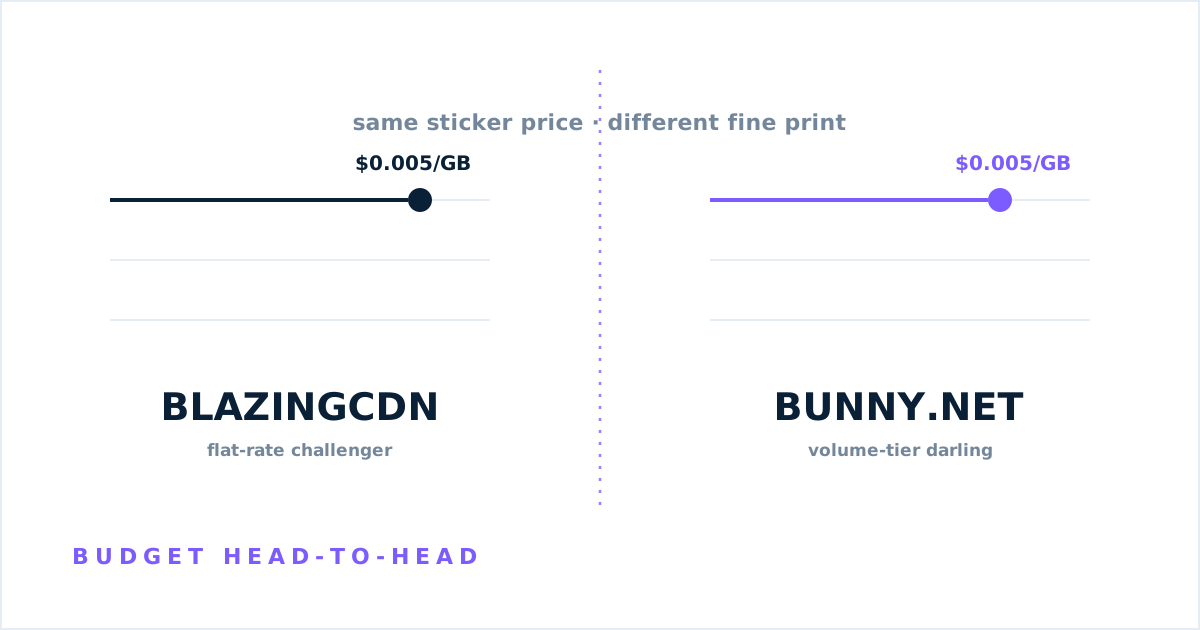
BlazingCDN vs Bunny.net: price-performance sharpened.
Two aggressive challengers compared where their pitch overlaps: maximum delivery per dollar.
Azure CDN vs Azure Front Door: Microsoft’s two answers.
Same vendor, different products, one clear direction of travel.
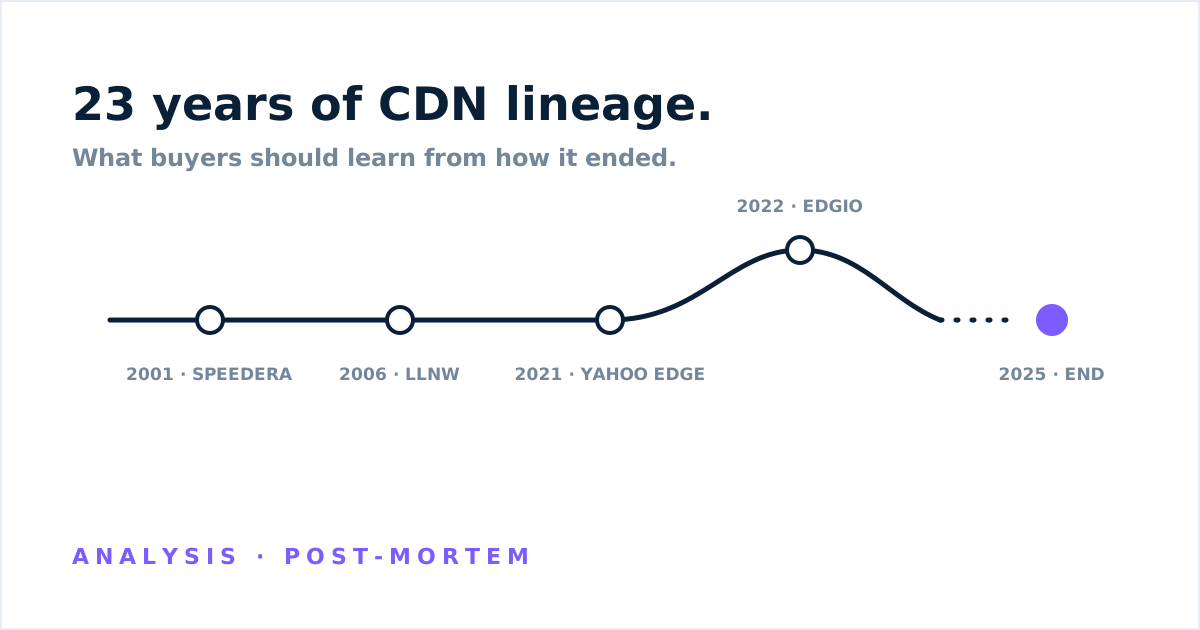
Edgio and the Verizon Media lineage: a technical post-mortem.
How 23 years of CDN history ended in January 2025, and what every buyer should learn from it.
QUIC.cloud vs NitroPack: the site-optimizer CDNs.
When the CDN is the delivery arm of an optimization engine, for the WordPress-shaped web.
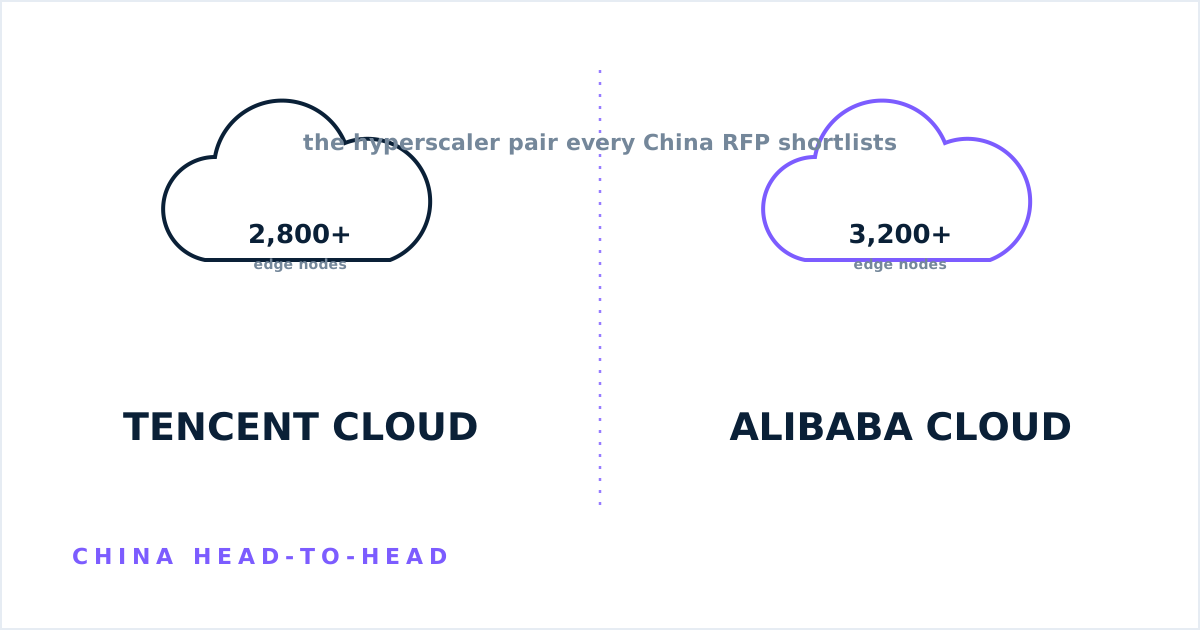
Tencent Cloud CDN vs Alibaba Cloud CDN.
China’s hyperscaler edges compared, for traffic that lives where they do.
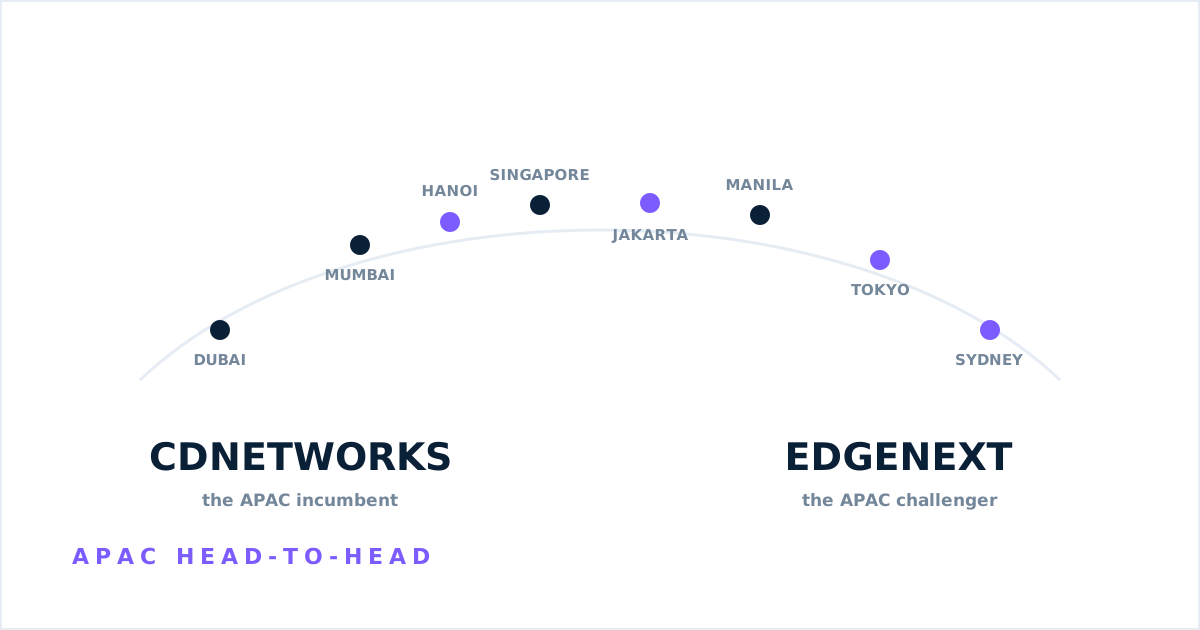
CDNetworks vs EdgeNext: the Asia specialists.
Two networks built east-first, compared where Western maps run out of detail.
Kingsoft Cloud CDN vs Volcengine CDN.
China’s challenger tier: the veteran independent against ByteDance’s traffic machine.
Sucuri vs Myra: website shields at two altitudes.
A mass-market site firewall against German critical-infrastructure engineering.
Fastly vs Amazon CloudFront: the engineering trade.
Instant VCL against AWS integration: what each architecture gives and takes.
Google Cloud CDN vs Azure Front Door.
Two hyperscaler edges with different souls: a cache bolted to a load balancer versus a global L7 front door.
CDN77 vs Bunny.net: the value tier’s best argument.
Two networks that made cheap respectable, compared on the engineering that hides under the price.

Akamai vs Cloudflare: a technical deep dive.
DNS mapping versus anycast, depth versus bundle: the two biggest edges dissected for engineers.

Aryaka SmartCDN vs Section: edge delivery as managed service.
Two answers to the same enterprise wish: someone else runs the edge, properly.
Azion vs Gcore: the emerging edge platforms.
Two ambitious full-stack edges from outside the usual capitals, compared on substance.
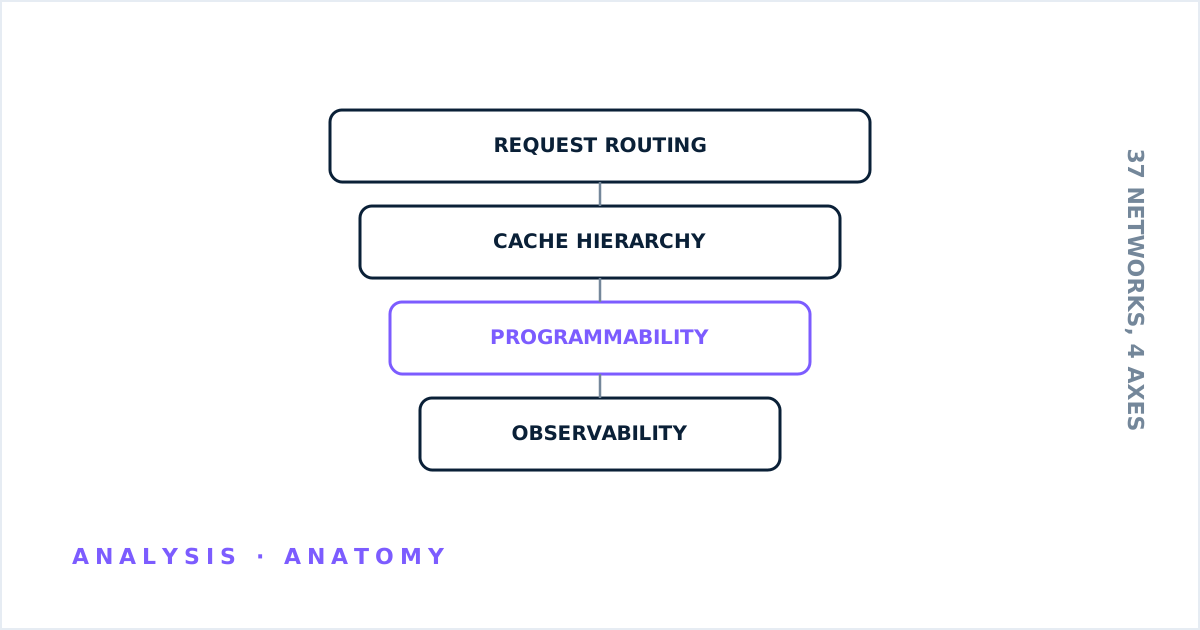
The technical anatomy of a CDN: how 37 networks actually differ.
Request routing, cache hierarchy, programmability and observability: the four axes that separate every network on the market.
Akamai vs CloudFront: the enterprise-vs-ecosystem decision.
Negotiated scale against AWS gravity — where the free origin transfer flips the maths, and where it doesn’t.

Akamai vs Azure Front Door: specialist edge vs the Azure default.
Where Microsoft’s bundled front door is enough, and where an Azure estate still buys a specialist network.
Cloudflare vs Akamai: two enterprise security stacks compared.
Bundled everything against composed depth — WAF, bots, DDoS and API security, product by product.
Fastly vs Akamai for media delivery.
Real-time control against broadcast-scale capacity — which network carries your streams, and when both do.
CloudFront vs Google Cloud CDN: two hyperscaler instincts.
AWS’s feature-rich distributions against Google’s deliberate minimalism — the meters, side by side.

CloudFront vs Azure Front Door: two billing shapes collide.
Pure metering against base-fee-plus-meters — and why the crossover point sits lower than most teams think.
Google Cloud CDN vs Cloudflare: checkbox vs platform.
Metered GCP delivery against flat-rate everything — where each model wins on a GCP-native stack.
Fastly Compute vs Cloudflare Workers: the edge platforms.
Per-request Wasm sandboxes against V8 isolates — runtime model, limits and pricing, side by side.
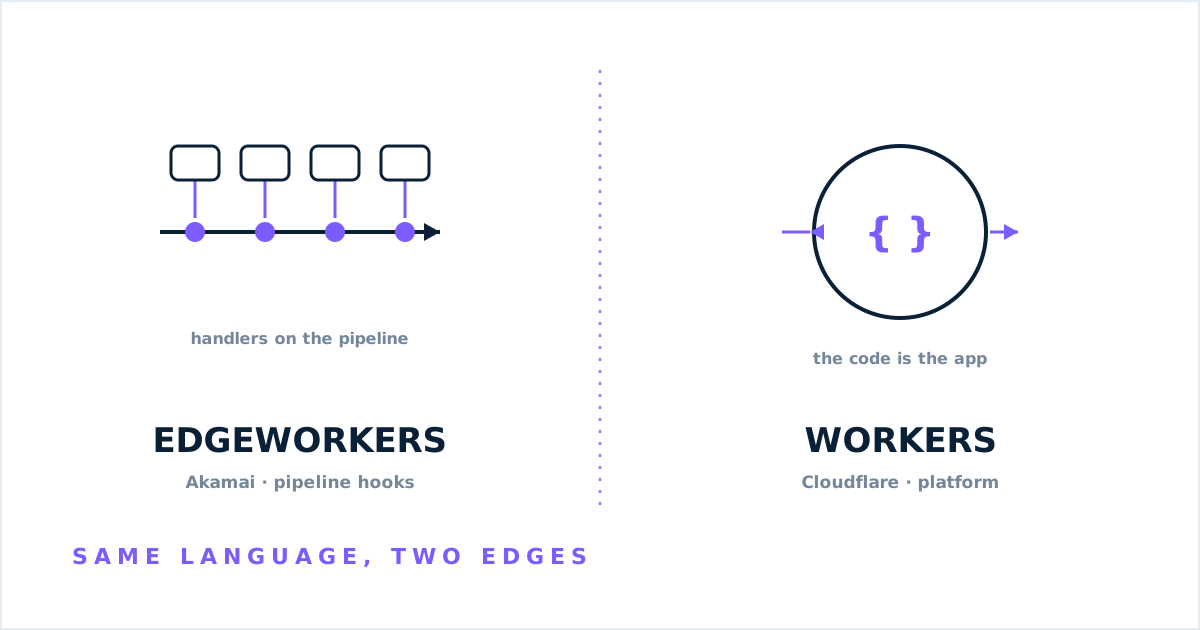
Akamai EdgeWorkers vs Cloudflare Workers.
Delivery-pipeline hooks against a general-purpose platform — the same language, two very different edges.
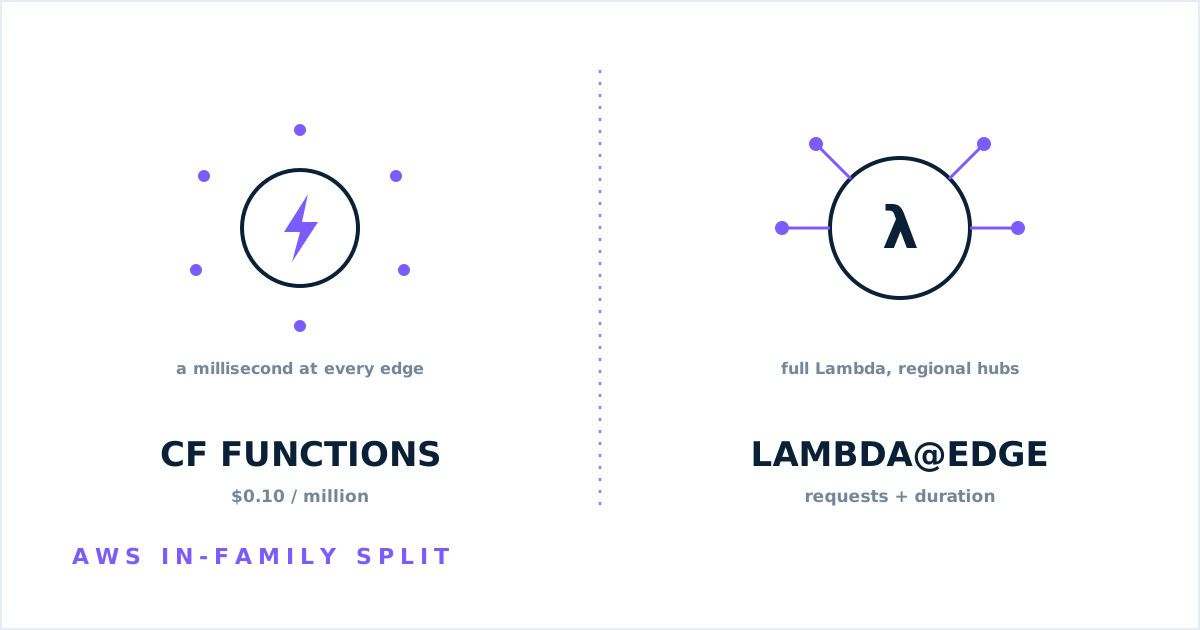
CloudFront Functions vs Lambda@Edge: the in-family split.
Sub-millisecond sandbox or full Lambda at the edge — triggers, limits and the 6× cost gap, worked.
Bunny vs KeyCDN: the pay-as-you-go favorites.
Rate cards, minimums and hidden line items — the two mid-market defaults, meter by meter.

Bunny vs BlazingCDN rematch: a year of price war.
The budget tier’s two aggressors, one year on — what moved on the rate cards and what the flat-rate model trades away.

CDN77 vs KeyCDN: bundle against meter.
A 250 TB flat bundle versus a per-GB meter — where each European mid-market network wins on your invoice.

CacheFly vs Fastly: the throughput question.
The TCP-anycast pioneer against the real-time edge — sustained throughput, control planes and contracts compared.

Gcore vs Bunny: Europe’s two edge platforms.
Carrier-grade network and bundled security against the price-first product machine — the European mid-market decided.

Alibaba vs Tencent rematch: 2026 POP maps.
Both giants now claim 3,200+ nodes — what the 2026 maps, billing models and mainland rules actually say.
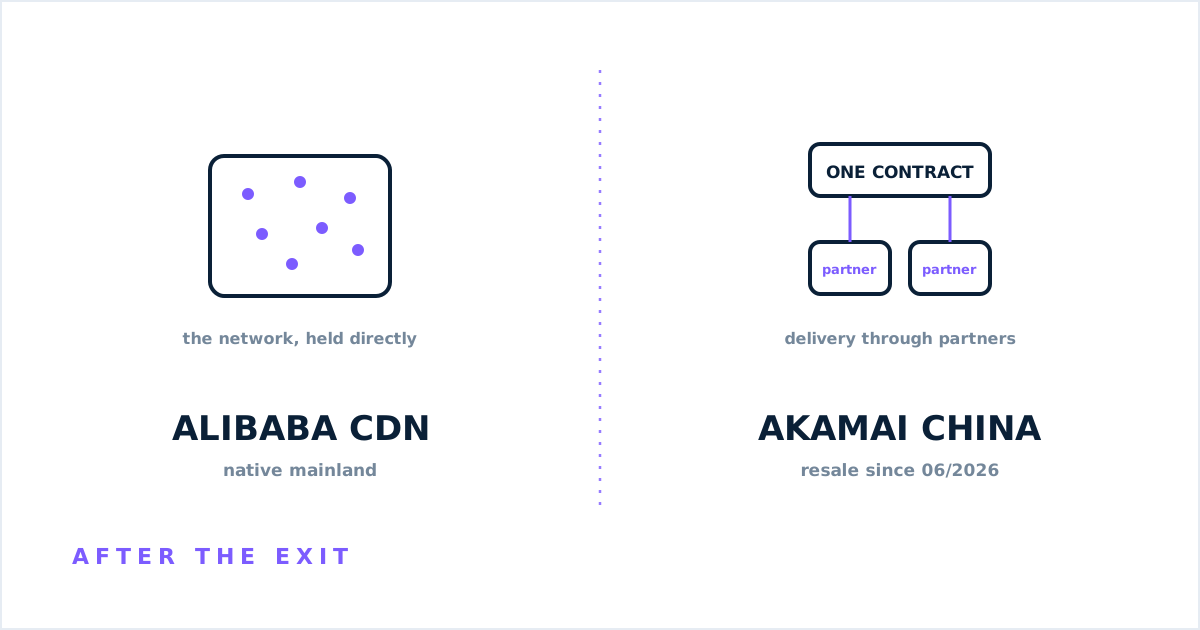
Alibaba Cloud CDN vs Akamai China, after the exit.
Akamai’s direct mainland CDN ended June 2026 — what partner-based delivery means against Alibaba’s native network.
Tencent vs Baidu AI Cloud: two Chinese edges.
EdgeOne’s fused security-delivery platform against Baidu’s lean mainland network — scale, meters and fit.
Huawei vs Alibaba: two Chinese giants, one delivery decision.
2,800 nodes against 3,200 — the node maps, package billing and ecosystem pull that actually decide this.
Cloudflare WAF vs Akamai App & API Protector.
The two most-shortlisted WAFs, product against product — engines, tuning burden, limits, buying reality.
Fastly Next-Gen WAF vs Cloudflare WAF.
SmartParse-anywhere against network-scale edge rules — detection, deployment and blocking confidence compared.
Imperva vs Akamai: specialist against edge giant.
Thales-era Imperva against Akamai’s portfolio — WAF, DDoS SLAs, bots and the data layer where they differ most.

Imperva vs Cloudflare: two ways to buy security.
Compliance-grade specialist depth against the flat-priced everything-network — SLAs, scope and spend compared.
Radware vs Imperva: two security veterans.
DDoS-heritage appliances-to-cloud against WAF-and-data depth — where each veteran earns the contract.
Myra vs Link11: the EU sovereignty duel.
Germany’s two BSI-qualified providers — compliance-maximal against performance-led in the sovereignty market.
Sucuri vs Cloudflare free tier: paid vs $0.
What ~$200/year of managed website security buys that the famous free plan doesn’t — and the reverse.
DataDome vs Cloudflare Bot Management.
Specialist bot defense against the network’s built-in — detection depth, deployment freedom, enterprise gates.

HUMAN vs DataDome: the pure-play duel.
Breadth from ad fraud to account abuse against a focused real-time engine — the category’s two Leaders.
Akamai Bot Manager vs DataDome.
Edge-platform gravity against specialist freedom — tuned power versus turnkey speed in bot defense.
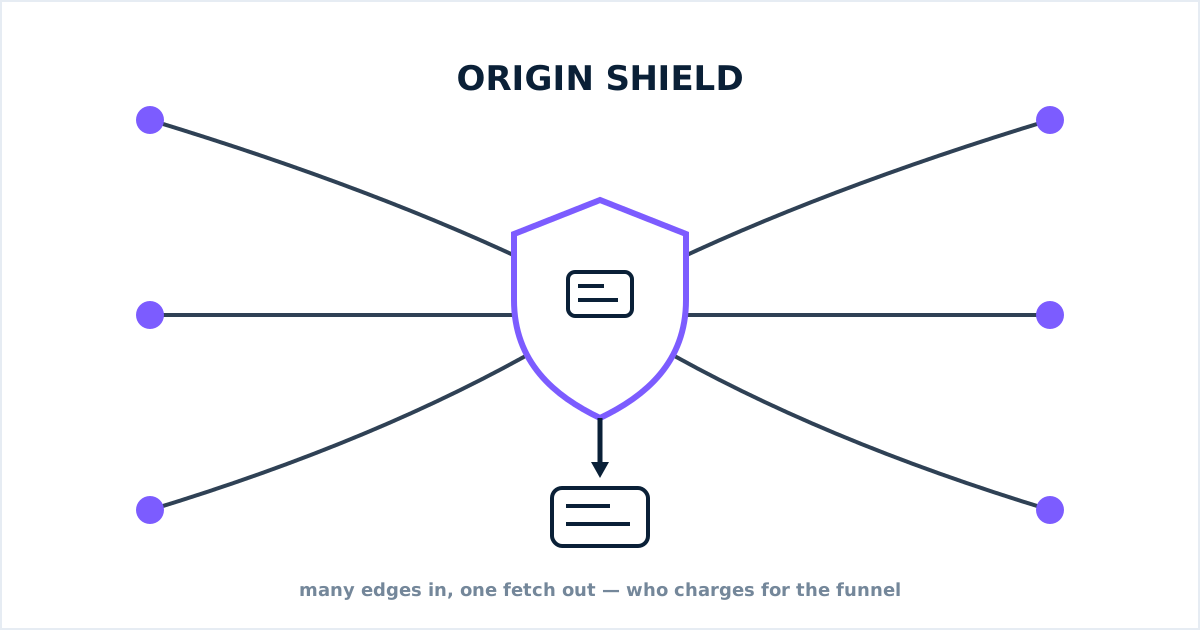
Origin shield: who has it, who charges.
Shield layers across the majors — free, billable, or bring-your-own — with the workings shown.

Brotli & Zstandard: the compression matrix.
Edge encoding across the majors — who serves zstd, who tops out at Brotli, who still re-gzips.

HTTP/3 compared: who serves QUIC.
Defaults, toggles and the one major holdout — the state of QUIC at the edge in 2026.

WebSockets at the edge: who proxies it.
Connection limits, idle timeouts and WAF caveats — the long-lived socket, provider by provider.
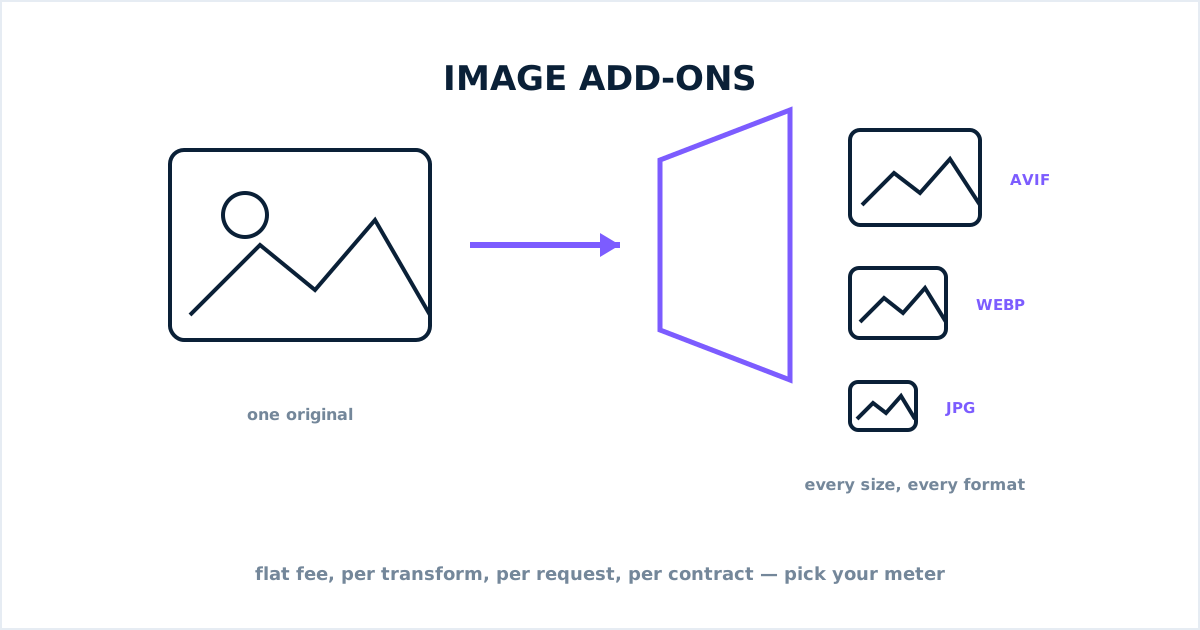
Image add-ons: four ways to sell pixels.
Flat fee, per transform, per request or per contract — the optimizer pricing models, measured.
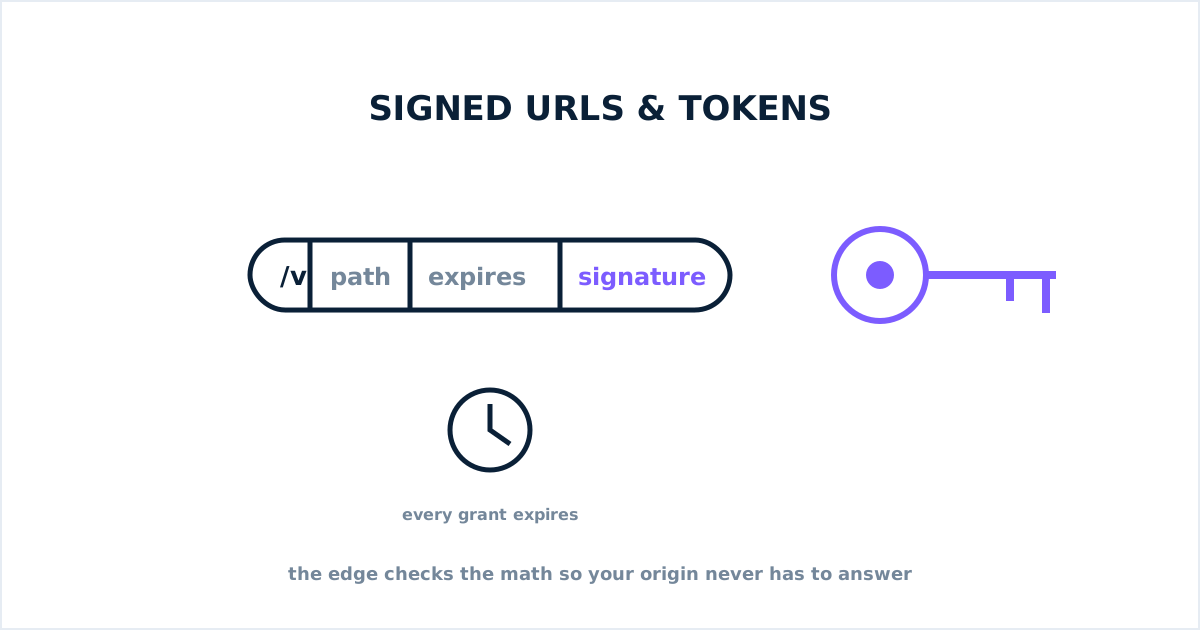
Signed URLs & tokens, compared.
Cookie or URL, HMAC or key pair, built-in or build-it — edge content locking across the field.
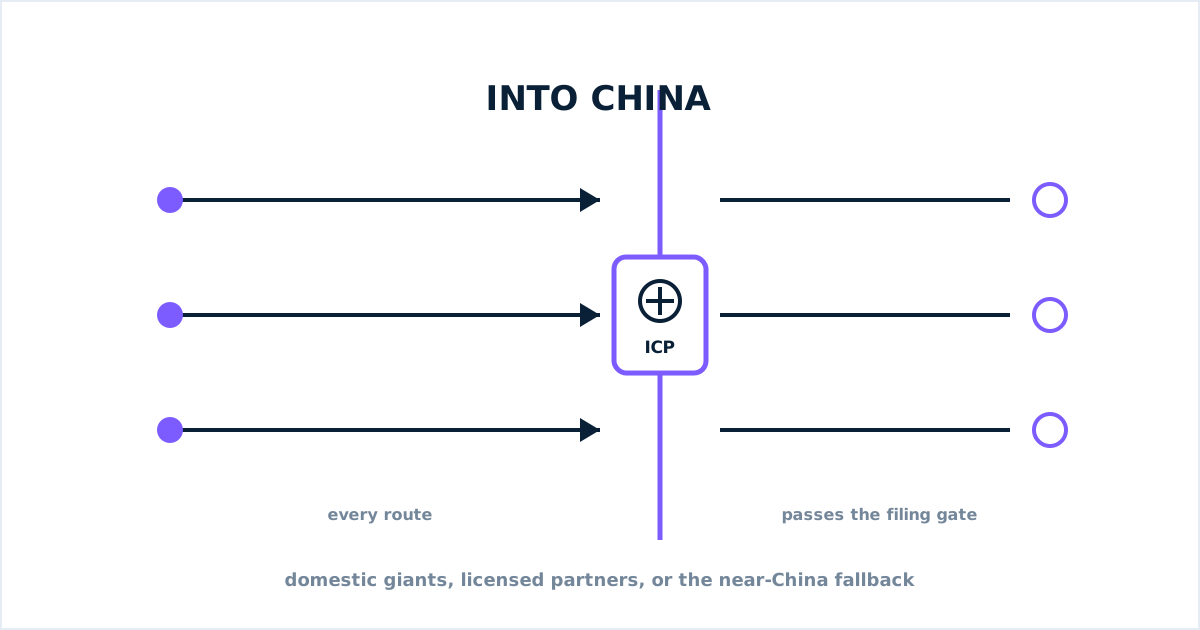
Delivering into China: the 2026 field.
Domestic giants, licensed partnerships and the near-China fallback — after Akamai's exit.

Prefetch compared: who speculates.
Speculation Rules at the edge, classic object prefetch and segment lookahead — layer by layer.
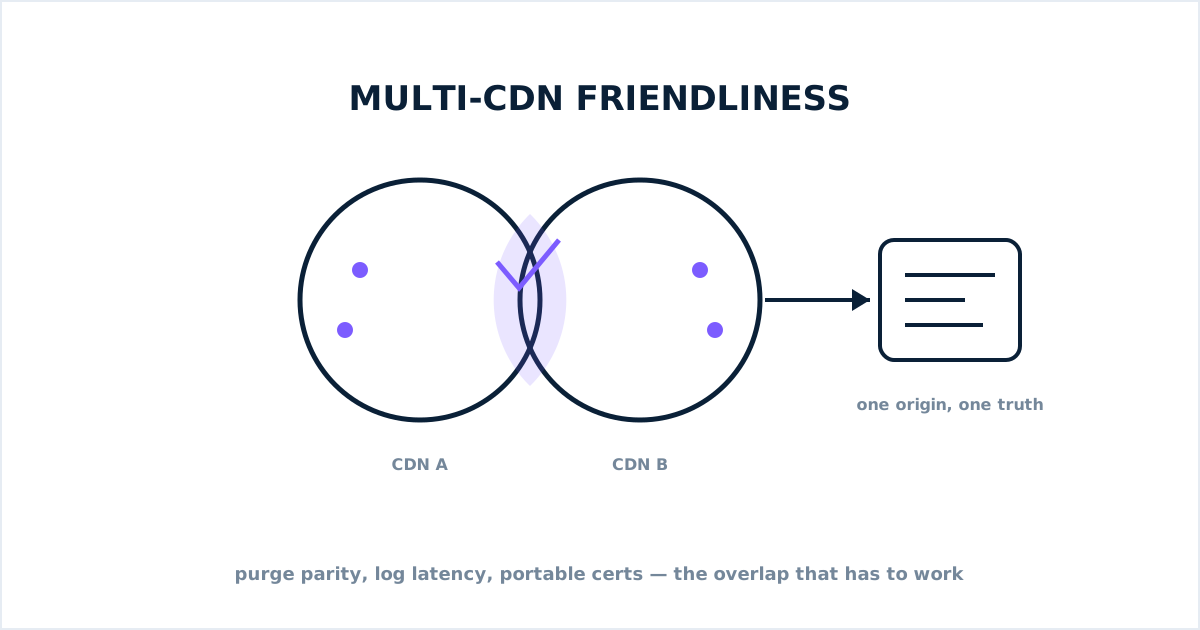
Multi-CDN friendliness, scored.
Purge parity, log latency, TLS portability and contract shape — who's a good citizen in a mixed estate.

Free tiers & trials, compared.
Fourteen days, $50 or a terabyte — what each on-ramp really lets you evaluate.
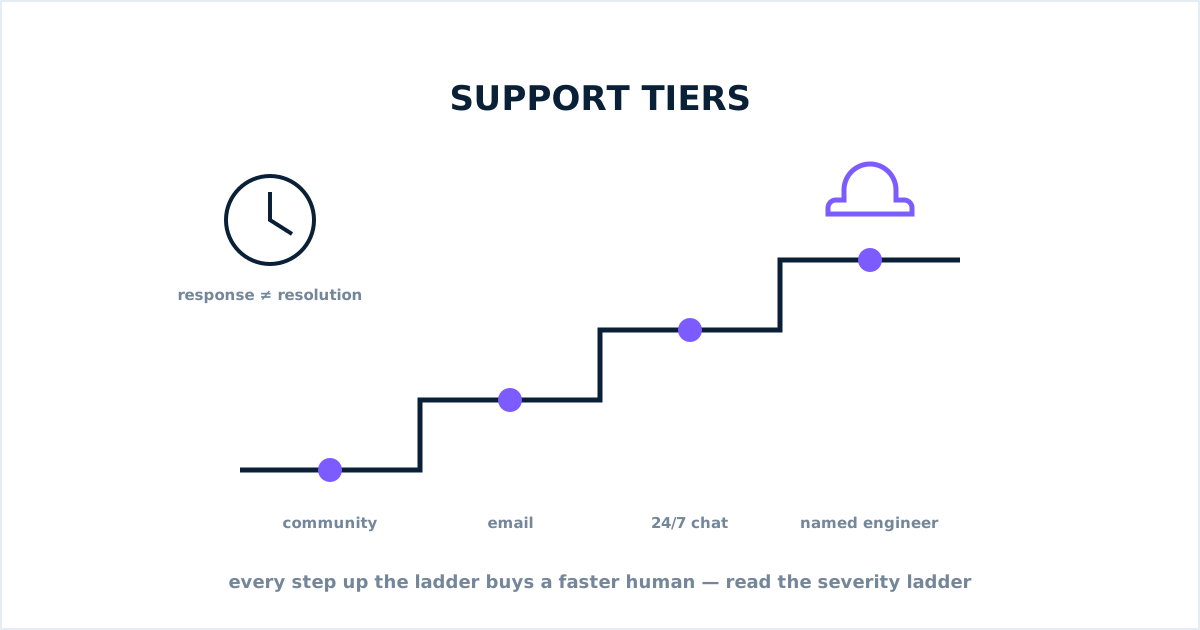
Support tiers: the price of a human.
Severity ladders, response SLAs and named engineers — support models across the field.
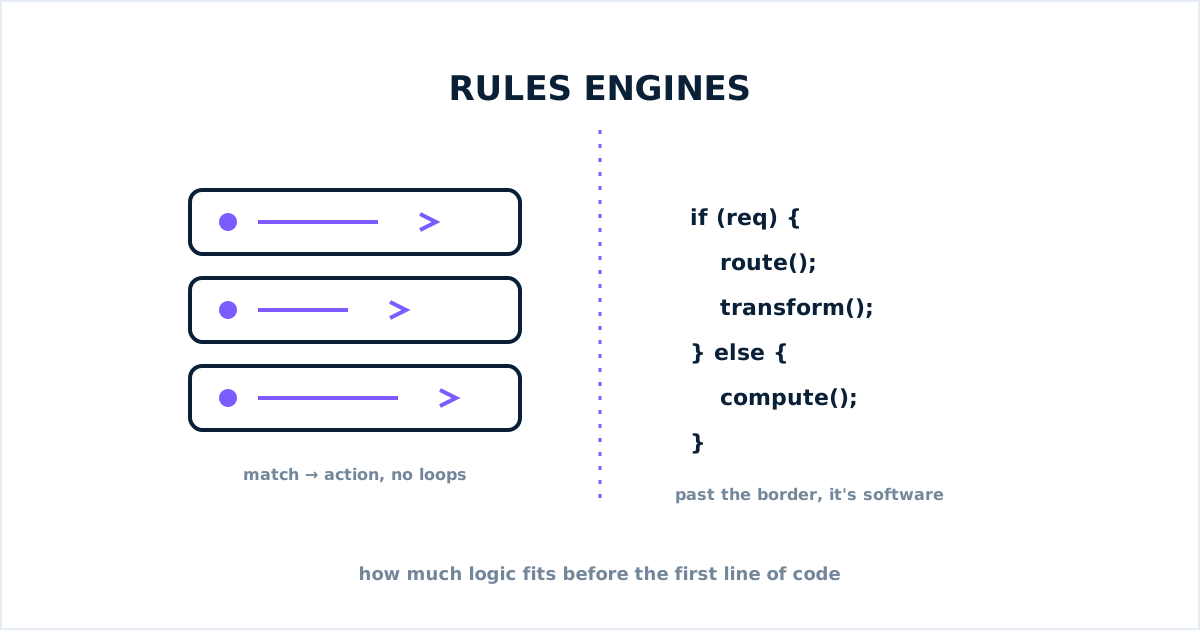
Rules engines: logic before code.
Rulesets, Property Manager, VCL and policy checkboxes — where each declarative layer runs out.
The five video CDNs that matter.
Live scale, purge speed and segment economics — the delivery field, narrowed and scored.

Under a cent per GB: the honest field.
Who's genuinely below $0.01, what the price buys, and what it quietly doesn't.
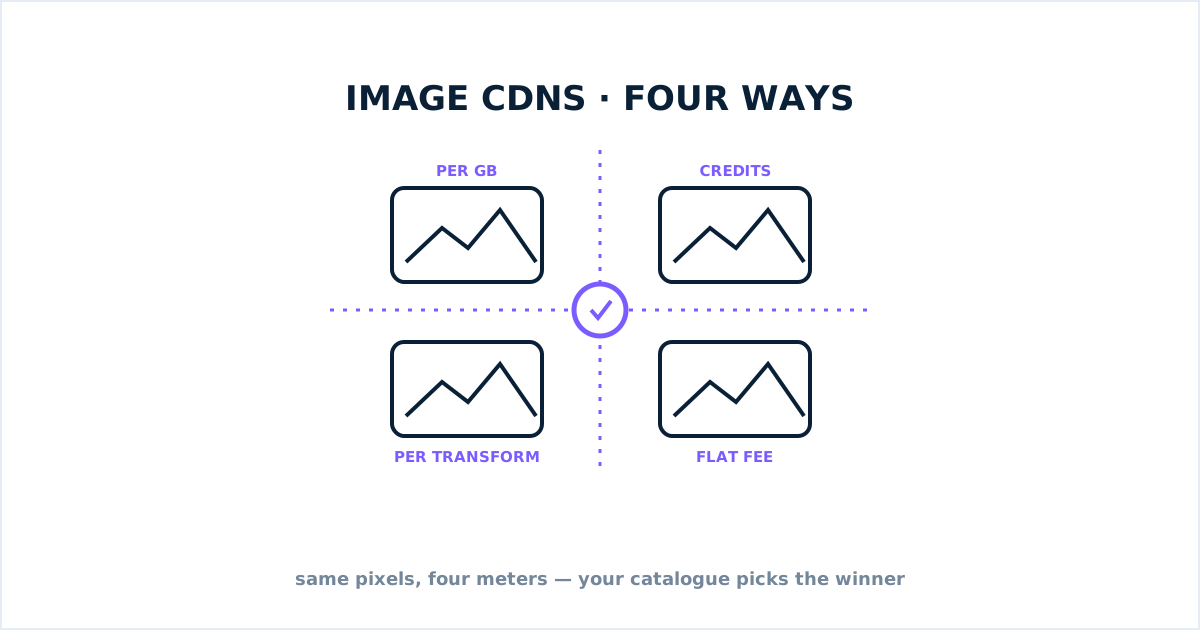
Image CDNs: the four-way test.
Cloudinary, imgix, ImageKit and the CDN-native optimizers — meter, catalogue, workflow, exit.
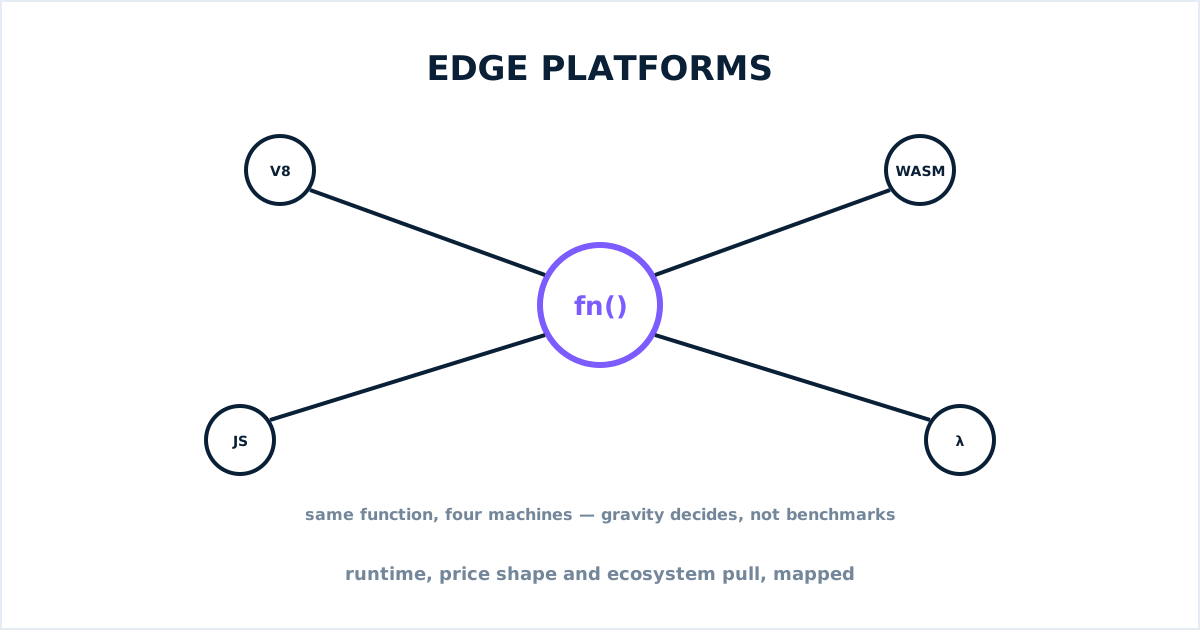
Edge platforms: the field, mapped.
Isolates, WASM, two-tier JS and Deno at the value tier — runtime, price shape and gravity compared.
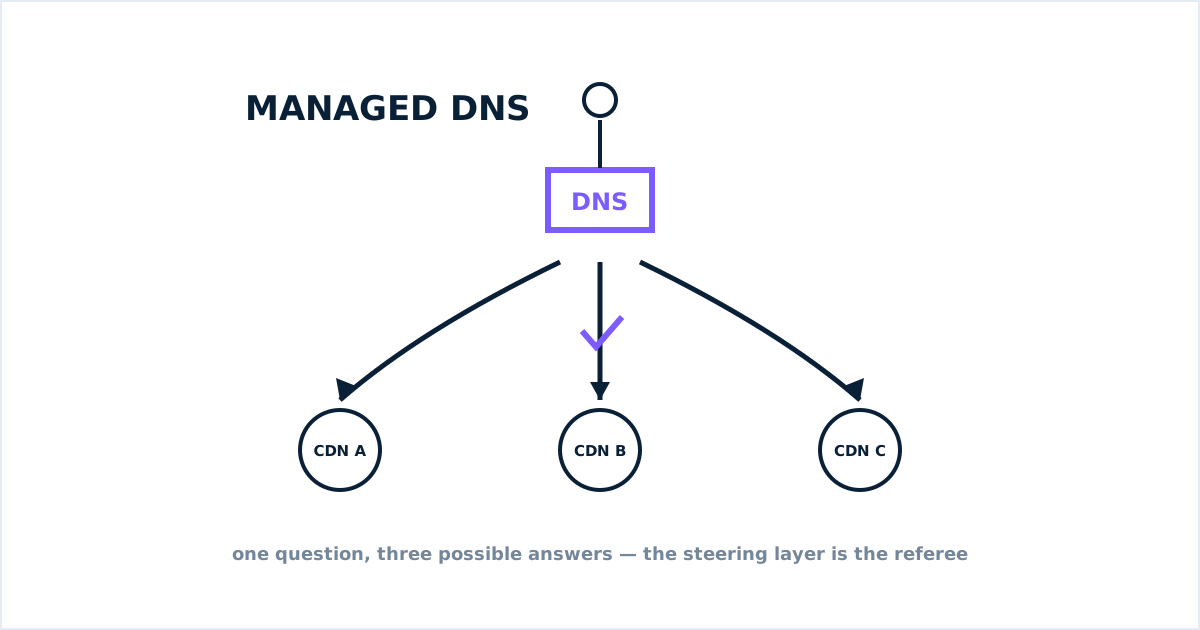
Managed DNS for multi-CDN, compared.
Filter chains, routing policies and RUM feeds — the DNS layer that decides which CDN answers.

Multi-CDN orchestrators, mapped.
Steering-only to full virtual edge — the platforms that run several CDNs as one, and their trades.
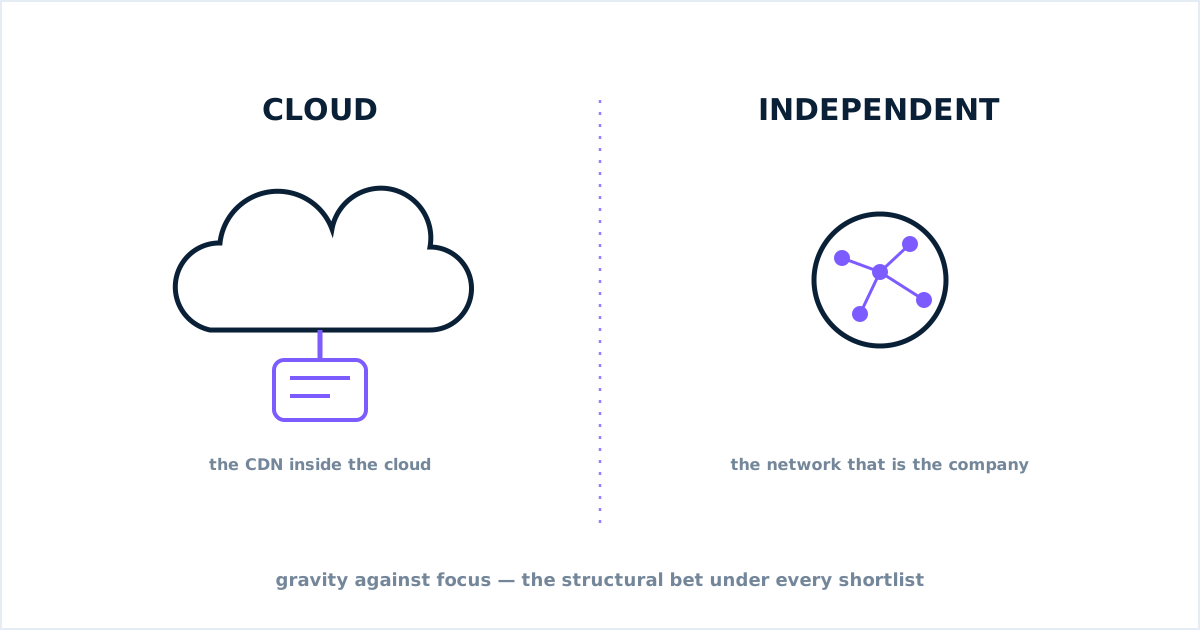
Cloud CDNs vs independents.
Ecosystem gravity against delivery-first focus — how the business model shapes your bill and leverage.
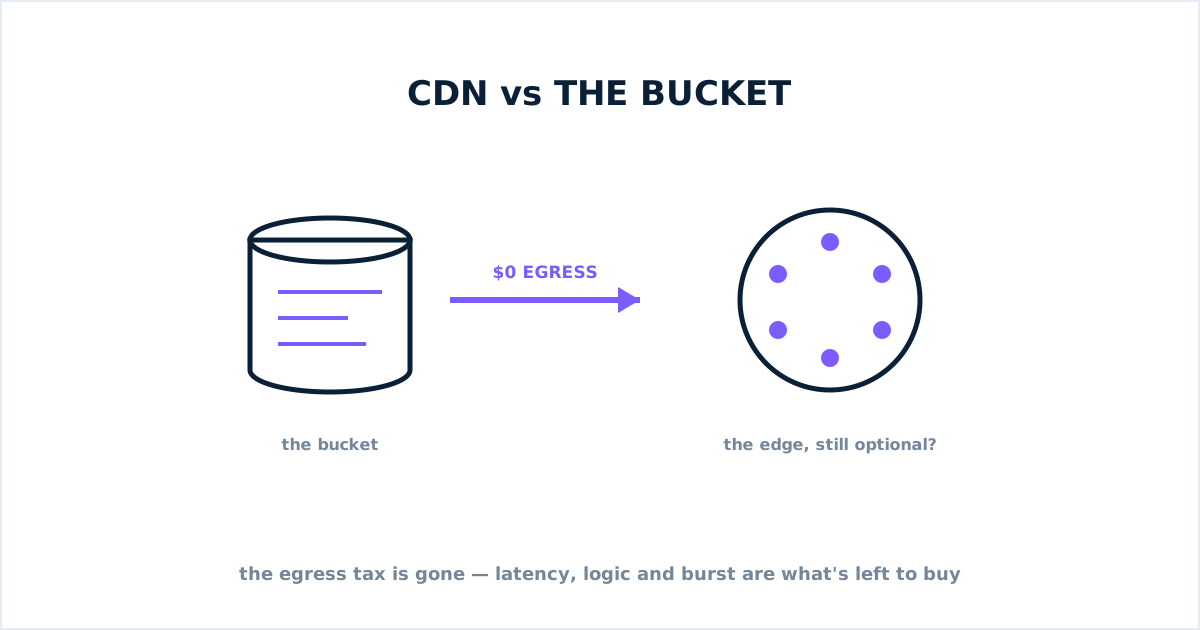
CDN vs the bucket, compared.
Zero-egress storage rewrote the math — when serving direct works, and where it quietly fails.
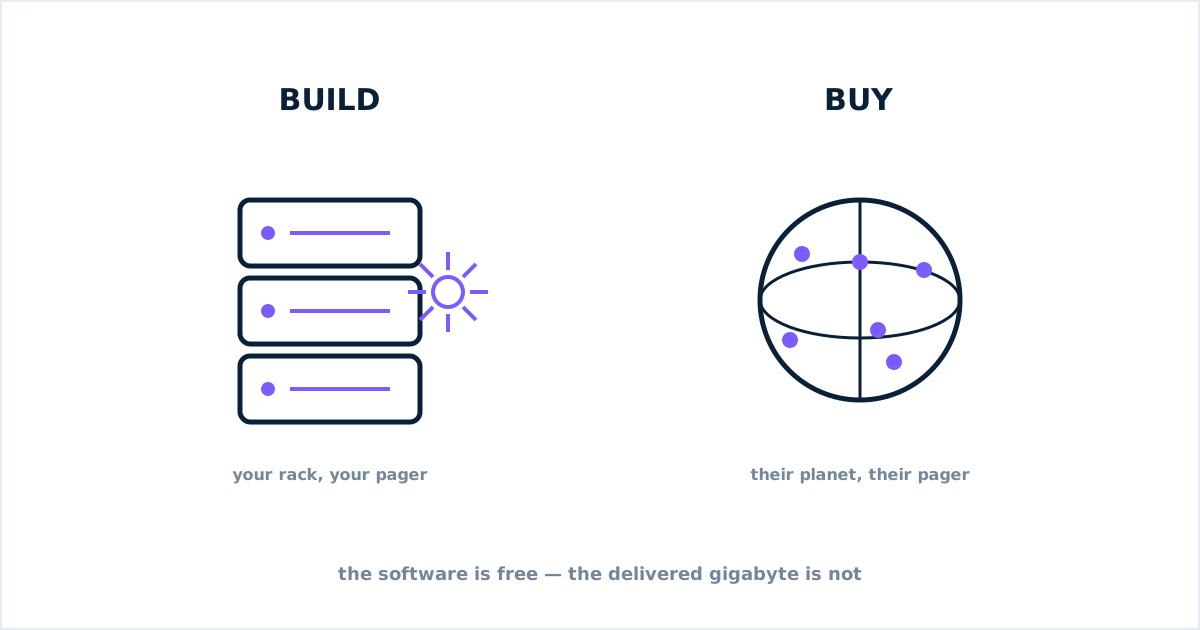
CDN vs DIY caching, honestly.
What a Varnish or nginx tier really replaces — and the headcount line every build plan omits.
Anycast DNS providers, compared.
Network shape, DDoS posture, steering ceilings — the resolution layer everything else depends on.
RUM products, compared.
CrUX to mPulse — data depth, retention and price shape, scored for delivery decisions.
Synthetic monitoring, compared.
Vantage quality, test depth and alert honesty — the robot fleets, from agent armies to uptime pingers.
The LATAM CDN field.
Azion's home turf, the carrier tier and the majors — and why Brazil is a different market from the rest.
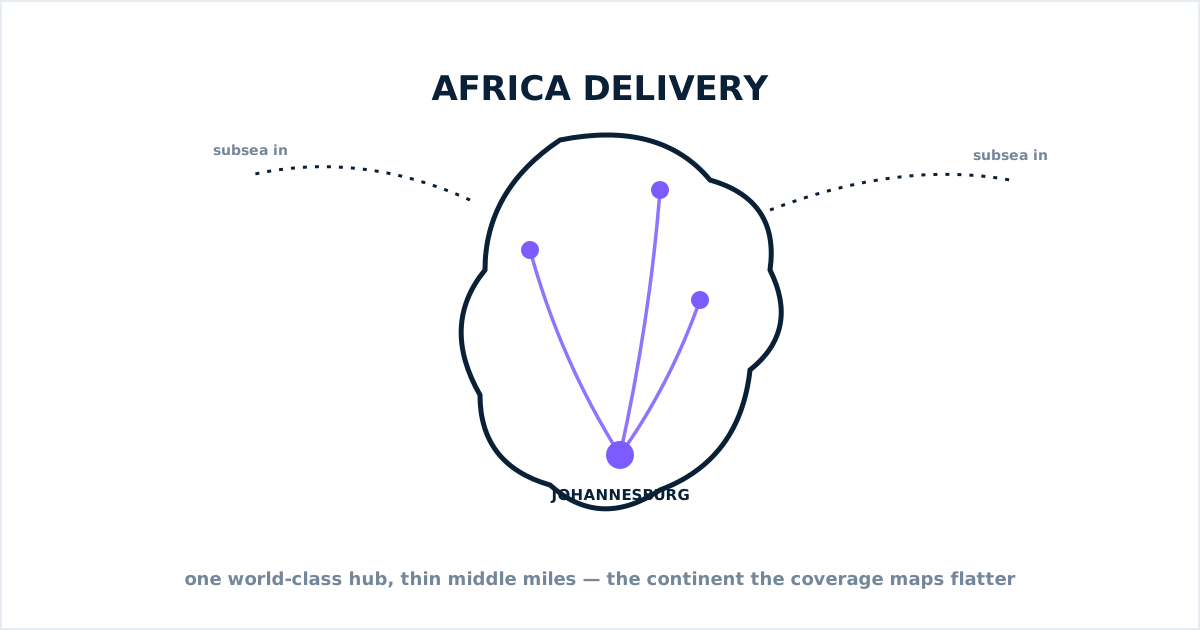
The Africa CDN field.
Johannesburg's gravity, thin inland peering and subsea abundance — delivery where the maps flatter.
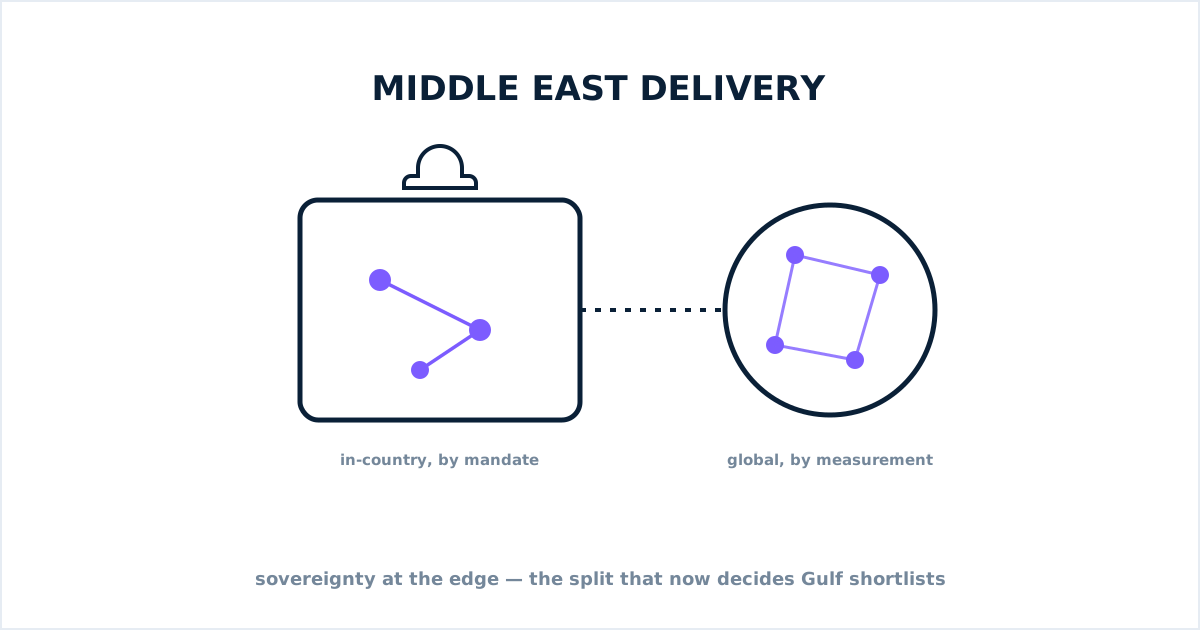
The Middle East CDN field.
Nineteen networks in-region, sovereign carriers rising, and compliance as the real shortlist filter.

The India CDN field.
Metro POPs, a Tier-1 home network, partner models and localization rules — the biggest open market.
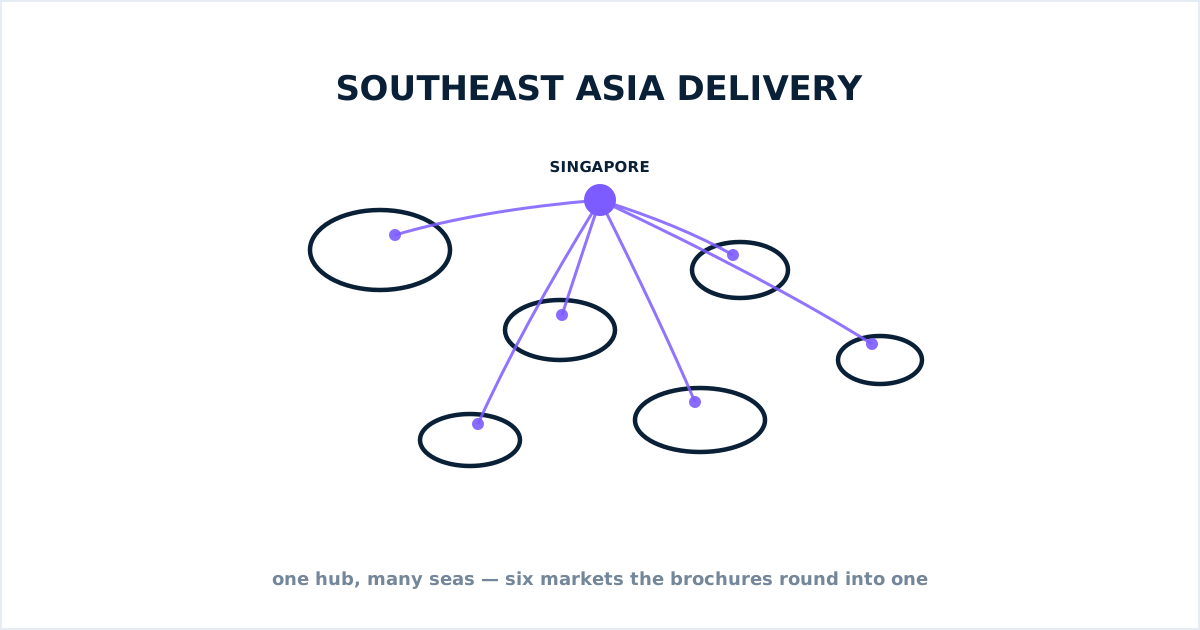
The Southeast Asia field.
Singapore gravity, archipelago physics and the APAC specialists — six markets pretending to be one.
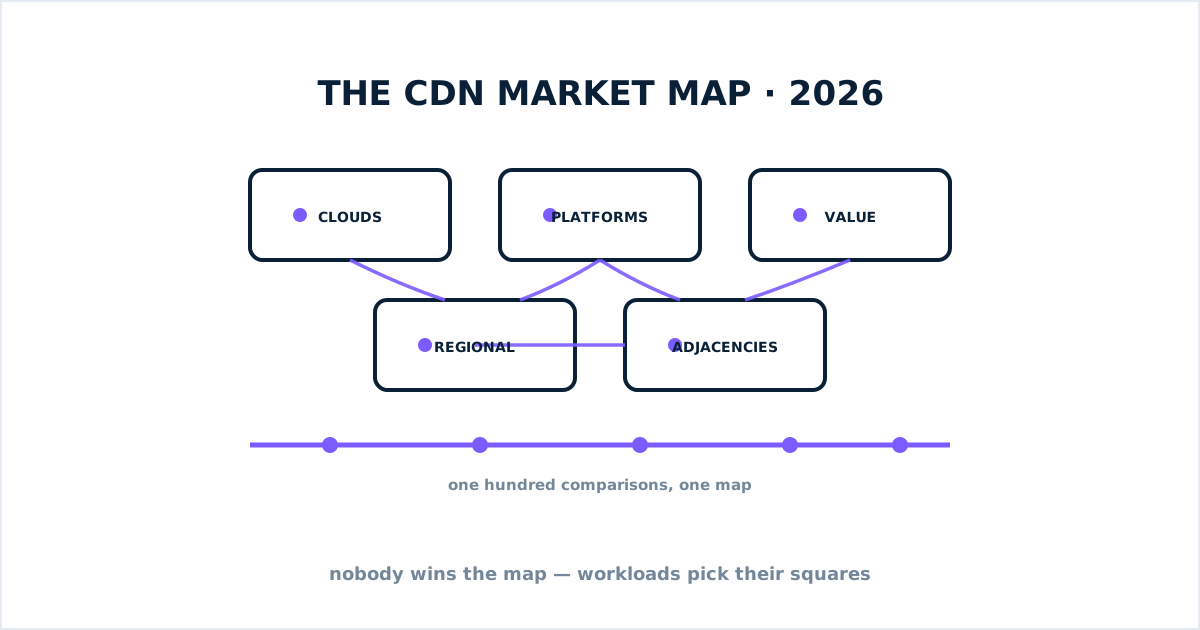
The CDN market map, 2026.
One hundred comparisons distilled — every tier, adjacency and regional layer of the delivery market, mapped.